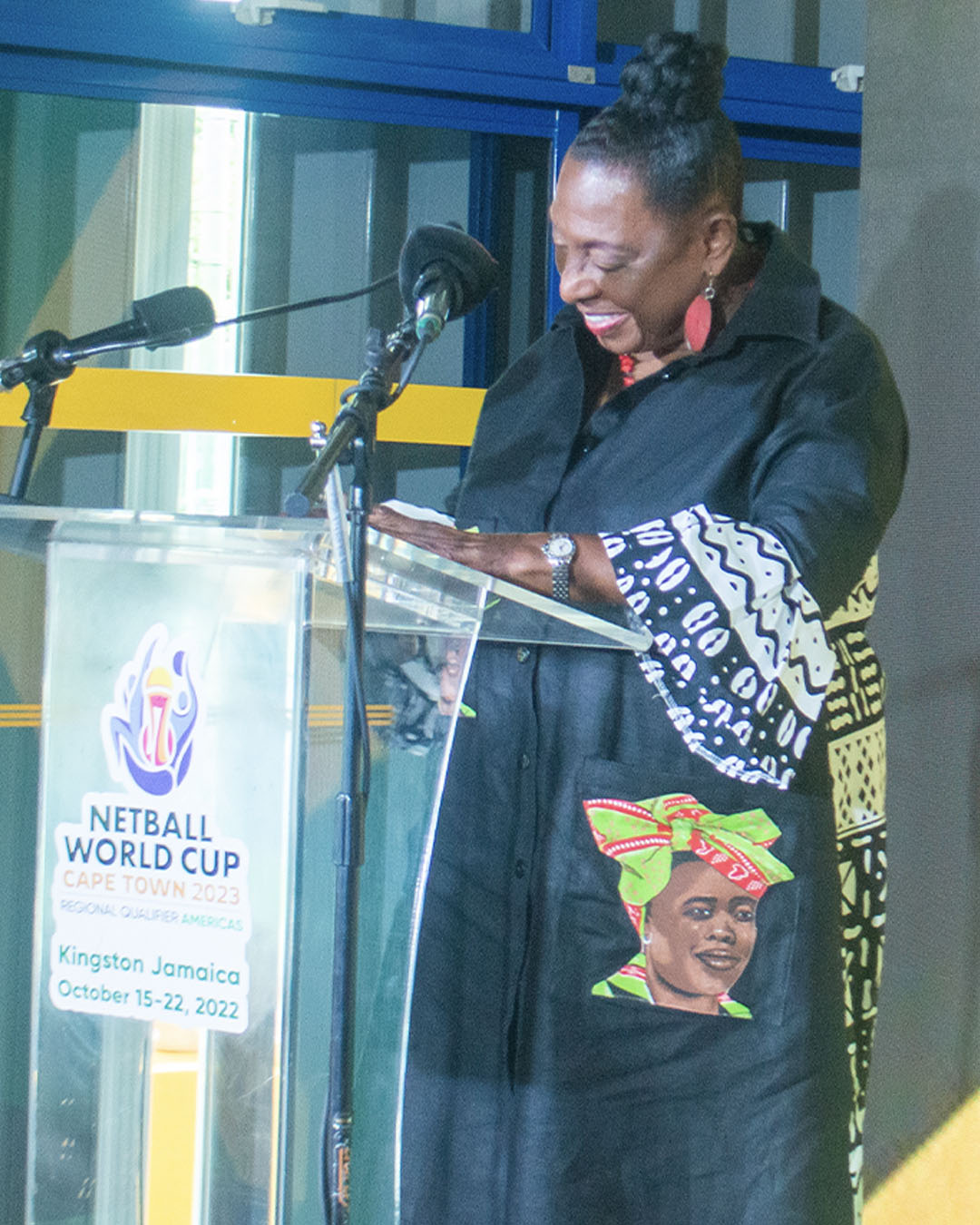
The Sunshine Girls are one of the most consistently excellent national teams Jamaica has ever produced. They’ve been ranked in the top five in the world for years. They compete at every major tournament with genuine medal expectations. They’ve beaten teams from countries with vastly larger populations and budgets. By any objective measure, Jamaican netball is an international success story.
So why does nobody seem to care?
That’s an exaggeration, obviously. The netball community cares deeply, and when the Sunshine Girls are competing in a World Cup or Commonwealth Games, Jamaican fans show up — at least on social media. But outside of those marquee moments, netball occupies a strange position in the Jamaican sporting landscape: respected in theory, ignored in practice. Everyone agrees the Sunshine Girls deserve more attention. Nobody does anything about it.
This is the visibility problem. And it’s solvable — but only if people stop treating it as inevitable.
The Numbers Don’t Lie
Compare the media coverage netball receives to football and track and field, and the disparity is staggering. On any given week, the Reggae Boyz will dominate Jamaican sports media even during periods when the team isn’t playing. Track and field gets significant coverage during the season, with Champs alone generating weeks of wall-to-wall content. Netball gets a handful of articles during major tournaments and near-silence the rest of the year.
Television broadcasting follows the same pattern. JPL matches, despite modest attendance, receive regular broadcast coverage. Reggae Boyz qualifiers are must-watch television events. Netball’s domestic competition — the Jamaican Netball Association’s club season — receives minimal broadcast attention, and international friendlies often go uncovered entirely.
The sponsorship landscape is equally imbalanced. Major Jamaican brands invest heavily in football and athletics. Netball sponsorship, while it exists, operates at a fraction of the scale. And because sponsorship follows eyeballs, and eyeballs follow media coverage, the whole system becomes a self-reinforcing cycle: less coverage leads to less sponsorship, which leads to less investment in the product, which leads to less coverage.
Breaking that cycle requires deliberate intervention. It won’t fix itself.
Why This Happens
The visibility problem isn’t unique to Jamaica or to netball. Women’s sports globally have fought — and continue to fight — for media parity with men’s sports. The structural biases are deep and persistent: sports media organisations are disproportionately staffed and led by men who prioritise men’s sports; broadcast schedules favour established properties over emerging ones; and advertising revenue models are built on historical audience data that reflects past neglect rather than current potential.
But there are Jamaica-specific factors too. Football benefits from the global EPL ecosystem — Jamaican fans consume Premier League content voraciously, and that consumption creates a media infrastructure (pundits, writers, social accounts) that naturally extends to local and national football coverage. Track and field benefits from Champs, which is the biggest annual sporting event on the island and generates enormous organic attention.
Netball doesn’t have an equivalent engine. There’s no global professional netball league that Jamaican fans follow obsessively. There’s no annual domestic event with the cultural weight of Champs. The sport exists in a space where the product is excellent but the ecosystem around it — the media infrastructure, the fan culture, the commercial framework — hasn’t been built.
What Other Countries Have Done
The good news is that other netball nations have faced the same problem and made progress. Australia’s Super Netball league has demonstrated that professional netball can attract significant broadcast audiences, corporate sponsorship, and mainstream media attention. It took deliberate investment — in production quality, marketing, and player promotion — but the results have been transformative.
England has followed a similar path with its Netball Super League, building a product that commands genuine media presence and commercial value. New Zealand has leveraged its national team — the Silver Ferns — as a vehicle for growing the sport’s profile, investing in player narratives and media partnerships that keep netball visible between major tournaments.
The common thread in all these cases is intentionality. None of these countries achieved netball visibility by accident or by waiting for the market to correct itself. They made strategic decisions to invest in the sport’s infrastructure, its media presence, and its commercial appeal. Jamaica can do the same — but it requires a plan.
Five Concrete Actions
1. Professionalise the domestic league’s media product. The Jamaican netball club season needs to be broadcast — not as an afterthought, but with proper production values. Multi-camera setups, commentary, graphics, highlights packages for social media. This doesn’t require a massive budget. A single decent camera setup with competent commentary and post-match highlights can transform a sport’s visibility. Partner with a streaming platform, create a YouTube presence, and distribute highlights aggressively on Instagram and TikTok.
2. Build the Sunshine Girls brand year-round. Currently, the national team is visible during tournaments and invisible between them. That needs to change. The Sunshine Girls should have a consistent social media presence — player profiles, behind-the-scenes content, training footage, interviews — that keeps fans engaged even when there’s no competition happening. The team has charismatic, articulate athletes. Let them tell their stories.
3. Create marquee domestic events. Track and field has Champs. Football has derby matches. Netball needs its own must-attend events — an annual all-star match, a season-opening showcase, or a series format that creates genuine excitement and gives media a reason to cover the sport. Event-driven coverage is how most sports break through in crowded media landscapes. Netball needs events worth covering.
4. Pursue strategic broadcast partnerships. The Jamaica Netball Association should be in active conversation with SportsMax, TVJ, and CVM about regular broadcast slots for domestic and international netball. The negotiating position isn’t as weak as it might seem: the Sunshine Girls’ international profile gives broadcasters a product with built-in audience interest, and the sport’s demographics (strong female viewership) appeal to advertisers who are actively seeking to reach women consumers.
5. Sponsor education and co-investment. Major Jamaican brands — telecoms, beverages, financial services — sponsor football and athletics because those sports offer proven exposure. Netball needs to present potential sponsors with a clear value proposition: an engaged, loyal fanbase; a sport with strong community roots; and a demographic profile that many sponsors struggle to reach through traditional sports. Co-investment models — where the sponsoring brand and the sport’s governing body jointly fund media and marketing initiatives — can de-risk the proposition for cautious corporate partners.
The Broader Women’s Sports Question
Netball’s visibility problem is part of a broader challenge facing women’s sports in Jamaica and the Caribbean. Despite Jamaica’s extraordinary success in women’s athletics and women’s football (the Reggae Girlz qualified for the FIFA Women’s World Cup, an historic achievement for Caribbean football), women’s sports remain systematically underfunded and underexposed relative to men’s sports.
This isn’t a natural outcome of market forces. It’s the product of decisions — made by media organisations, sponsors, governing bodies, and broadcasters — about where to allocate attention and resources. Those decisions can be changed. They should be changed. And netball, as one of the few sports where Jamaica consistently competes at the highest global level, should be at the front of that conversation.
The Sunshine Girls aren’t a charity case. They’re a world-class team representing a nation of three million people on the biggest stages in the sport. They deserve to be covered, supported, and celebrated with the same seriousness that Jamaica extends to its other internationally competitive programmes.
The Challenge
Fixing netball’s visibility problem isn’t easy. It requires money, strategic thinking, institutional commitment, and patience. It requires media organisations to cover the sport even before the audiences arrive, because audiences can’t arrive for something they can’t find. It requires sponsors to invest in potential rather than just proven returns. It requires the Jamaica Netball Association to think like a media company as much as a sports governing body.
But it’s doable. Other countries have done it. And Jamaica — with its passionate sports culture, its social media savvy, and its genuine on-court excellence — has every ingredient needed to turn netball from a hidden gem into a visible, valued, and commercially sustainable part of the island’s sporting identity.
The Sunshine Girls keep winning. The question is whether Jamaica is ready to start watching.