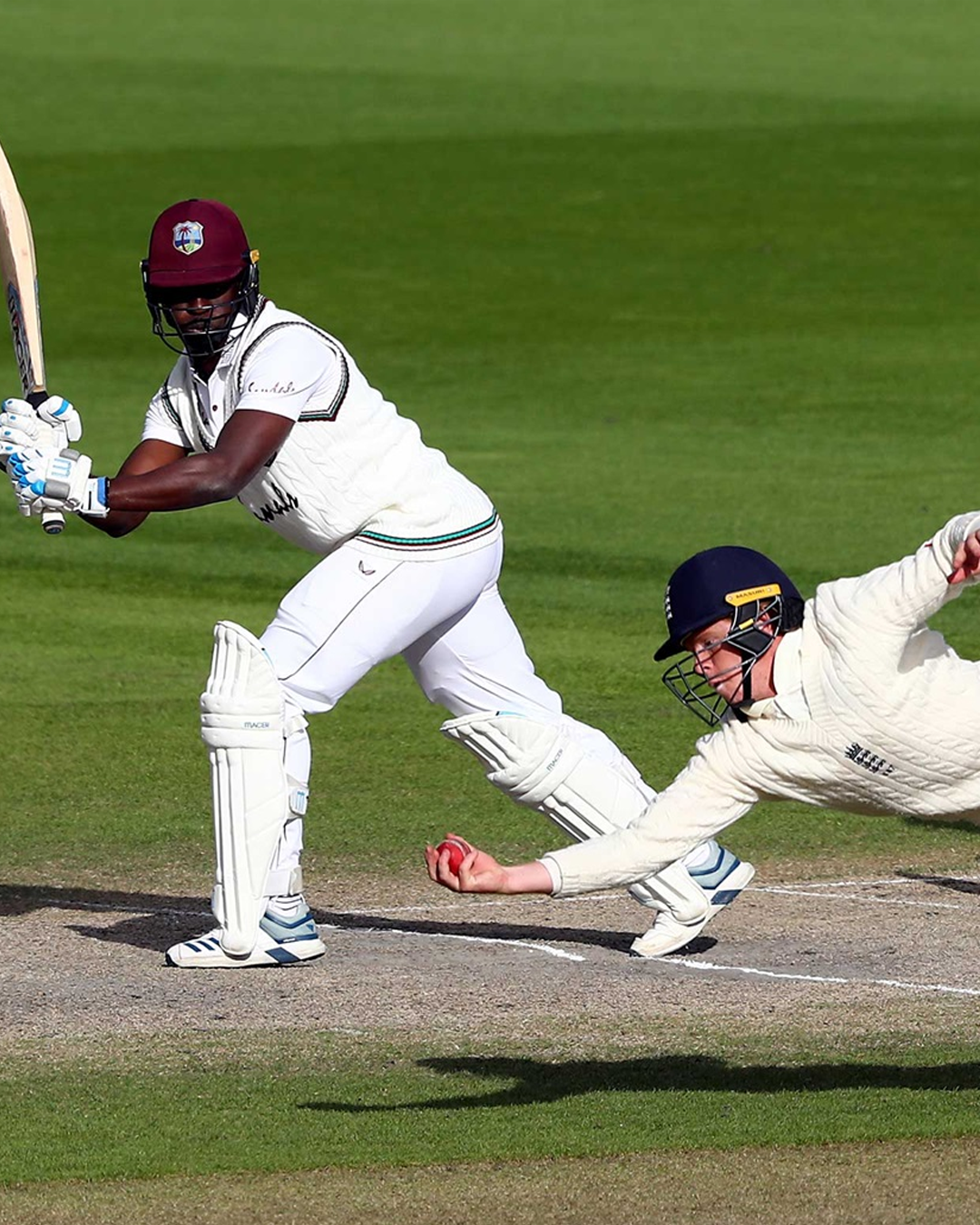
Drive through any parish in Jamaica on a Saturday afternoon and you’ll see football. On almost every open field, every school yard, every patch of flat-ish grass between buildings, there are kids playing football. It’s the default. The automatic choice. The thing Jamaican youth do when they have a ball and some free time.
Now try to find a cricket match.
You’ll find them, if you look hard enough. In certain schools that still carry the tradition. In parish competitions that run on the dedication of a few tireless volunteers. In clubs that have been around for decades, their membership aging but their commitment unshaken. Cricket in Jamaica hasn’t disappeared. But it has retreated — from the mainstream to the margins, from the front page to a footnote, from something every child played to something most children have never tried.
This is a feature story about what’s happening at the grassroots of Jamaican cricket. Not the West Indies team. Not the CPL. Not international rankings or ICC politics. The ground level. The schools and clubs and parish grounds where the next generation of Jamaican cricketers should be developing — and mostly isn’t.
The Schools: Where It Starts (and Often Ends)
Cricket in Jamaica’s schools has contracted dramatically over the past two decades. Schools that once fielded competitive cricket teams have dropped the sport entirely, redirecting their limited sports budgets toward football and track and field — sports that offer more visible pathways to scholarships, national representation, and professional careers.
The Manning Cup and DaCosta Cup in football, and Inter-Secondary Schools Boys and Girls Championships (Champs) in track and field, dominate the Jamaican school sports calendar. They attract media coverage, corporate sponsorship, and public attention. School cricket competitions exist, but they operate in relative obscurity — fewer teams, fewer spectators, minimal media coverage, and negligible sponsorship.
For a school principal making resource allocation decisions — where to spend limited funding, which sports to invest coaching time in — the incentive structure overwhelmingly favours football and track. Cricket costs more per participant (equipment is expensive), requires more specialised facilities (a proper pitch, nets for practice), and offers a less clear return on investment in terms of student scholarships or institutional prestige.
The result is predictable. Fewer schools playing cricket means fewer children exposed to the sport. Fewer children exposed means a smaller talent pool. A smaller talent pool means weaker parish and national age-group teams. And weaker age-group teams mean fewer players good enough to progress to senior domestic cricket, let alone international cricket.
The pipeline starts in schools. And in most schools, the pipeline doesn’t exist anymore.
The Clubs: Holding On
If school cricket is the pipeline’s entry point, club cricket is supposed to be its development stage — the place where young players who’ve been identified in school programmes graduate to a more serious, more competitive environment. The place where technical skills are refined, tactical understanding deepens, and the best players are prepared for domestic first-class cricket.
Jamaican club cricket still functions in this role, but barely. The clubs that remain active — and there are fewer each year — operate on shoestring budgets. Ground maintenance is the responsibility of the clubs themselves, and most can barely afford to keep their playing surfaces in acceptable condition. Equipment is shared, often old, sometimes unsafe. Coaching is provided by former players volunteering their time, not by professionally trained and compensated coaches.
The age profile of club cricket tells its own story. The membership skews older, with experienced players continuing to compete well into their 40s and 50s — not because they want to dominate age-group cricket, but because there simply aren’t enough younger players joining to replace them. A sport that isn’t attracting young participants is a sport with an expiration date.
There are exceptions. Some clubs in Kingston and St. Catherine maintain active junior programmes and continue to develop promising young cricketers. But these exceptions prove the rule: they survive because of the personal commitment of a few individuals, not because of any systemic support from cricket’s governing bodies.
The Facilities: Crumbling
Cricket is an infrastructure-intensive sport. You need a proper pitch — rolled, maintained, with consistent bounce. You need practice nets. You need outfield grass that’s actually cut. You need a pavilion where players can change. You need boundary markers, sight screens, a scoreboard. None of this is luxurious. All of it is basic.
And most Jamaican cricket facilities don’t have it. Outside of Sabina Park — Jamaica’s only international-standard venue — the playing surfaces available for domestic and grassroots cricket range from adequate to dangerous. Uneven bounce is not a character-building challenge when you’re a 14-year-old facing a fast bowler; it’s a safety hazard. And when the facilities are poor, parents — rightly — are reluctant to encourage their children to play.
The contrast with football is stark. Football requires a flat-ish surface and two sets of goalposts. That’s it. You can play on dirt, on concrete, on a school yard with bags for goalposts. The infrastructure barrier to entry is virtually zero. For cricket, the barrier is real, and in many parts of Jamaica, it’s insurmountable.
The Competition for Attention
Cricket’s grassroots decline in Jamaica isn’t happening in a vacuum. It’s happening in a context where the sport is competing for young people’s attention against football, track and field, basketball, dancehall culture, social media, gaming, and a dozen other claims on a teenager’s time and energy.
In that competition, cricket has significant disadvantages. It’s slow — a parish match can last an entire day. It’s technical — you can’t just pick up a bat and immediately be good; the learning curve is steeper than almost any other sport. It’s culturally unfashionable — in a society that increasingly values speed, spectacle, and instant gratification, a sport that rewards patience, technique, and the ability to bat for three hours without scoring quickly feels anachronistic.
The T20 format was supposed to address some of this. Shorter, faster, more exciting — T20 was designed to make cricket accessible to audiences and participants who couldn’t commit to the longer formats. And at the professional level, it has worked: the CPL is popular entertainment, and T20 internationals draw attention. But at the grassroots level in Jamaica, T20 hasn’t translated into increased participation. Watching cricket on TV and actually playing it are very different things, and the barriers to playing haven’t changed.
What Would a Revival Look Like?
Let’s be clear about the scale of the challenge. Reversing cricket’s grassroots decline in Jamaica would require sustained, coordinated effort over years, probably decades. There are no quick fixes. But there are strategies that could begin to turn the tide.
Equipment access. The single biggest barrier to youth cricket participation is the cost of equipment. Bats, pads, gloves, helmets — for a family living in most Jamaican communities, outfitting a child for cricket is a significant expense. A national programme that provides basic equipment to school cricket programmes — not as a one-off donation, but as an ongoing, budgeted commitment — would immediately expand the number of children who can play.
Coaching development. Cricket coaching at the grassroots level needs to be professionalized. That means training coaches, paying them, and deploying them to schools and clubs across the island — not just in Kingston but in every parish. The Jamaica Cricket Association needs to build a coaching workforce, not rely on the goodwill of volunteers.
Facility investment. At minimum, every parish needs one properly maintained cricket facility — a ground with a decent pitch, practice nets, and basic amenities. This is the foundation. Without it, nothing else matters.
School programme partnerships. Cricket’s governing bodies need to make it easy and attractive for schools to offer the sport. That means providing equipment, coaching support, and competition infrastructure — removing the burden from school administrators who are already stretched thin.
Making cricket visible again. Media coverage matters. Sponsorship matters. If grassroots cricket competitions are invisible — no coverage, no social media presence, no public awareness — then they don’t exist in the minds of potential participants. The JCA needs a communications strategy that puts grassroots cricket in front of the public, consistently and compellingly.
Why It Matters
Cricket is part of Jamaica’s cultural heritage. It arrived with colonialism, yes, but it was adopted, reshaped, and made Caribbean in ways that reflect the region’s creativity, resilience, and competitive spirit. The great West Indian teams of the past weren’t just cricket teams. They were cultural statements — demonstrations that Caribbean people could compete with and defeat anyone in the world at the highest level.
Losing that heritage — not through a dramatic collapse but through a slow, quiet erosion of participation at the base — would be a loss that goes beyond sport. It would be a loss of identity. Of connection to a history that shaped the region. Of an avenue through which young Jamaicans could develop discipline, teamwork, strategic thinking, and the resilience that comes from a sport where failure is built into the experience.
Cricket in Jamaica is not dead. But it is being outcompeted, under-resourced, and slowly forgotten at the level where it matters most — the grassroots. The schools, the clubs, the parish grounds. The places where the next Chris Gayle, the next Courtney Walsh, the next Marlon Samuels should be developing.
If we want those players to exist, we have to build the system that produces them. And right now, we’re not building. We’re watching it decay.
The fight for cricket’s next generation in Jamaica starts at the bottom. And right now, the bottom is losing.