Tag: Football

  • Jamaican Football Is Still in Trouble — And Here’s Why

    Jamaican Football Is Still in Trouble — And Here’s Why

    Five years ago, we published an article with a simple title: Football Is Still in Trouble. At the time, the European Super League fiasco dominated the headlines, and we used that moment to reflect on the deeper structural issues plaguing football — not just in Europe, but right here in Jamaica. Half a decade later, we find ourselves asking the same question. And the answer hasn’t changed nearly enough.

    The JFF Question

    The Jamaica Football Federation has been at the centre of every conversation about what’s wrong with the sport on the island. And for good reason. The governance structure remains opaque, the accountability mechanisms are weak, and the gap between what the federation promises and what it delivers continues to widen.

    We’ve heard the talking points. More qualified coaches. Better pathways. Stronger partnerships. And to be fair, there has been some movement — the appointment of a Director of Football was a step in the right direction. But steps aren’t enough when the staircase is crumbling.

    The interview above with the JFF’s Director of Football paints a picture of progress — hundreds of newly qualified coaches across the island. That sounds impressive on paper. But the real question isn’t how many coaches have certificates. It’s whether those coaches have fields to train on, equipment to work with, and players who can afford to show up consistently.

    The Talent Pipeline Is Leaking

    Jamaica doesn’t have a talent problem. We never have. Walk into any school yard in Kingston, Montego Bay, or Spanish Town and you’ll see kids with more natural ability in their left foot than some academy graduates in Europe have in their entire body. The problem has always been what happens after the school yard.

    The pathway from schoolboy football to the Jamaica Premier League is riddled with potholes. Coaching inconsistency, inadequate facilities, and the simple economic reality that most young Jamaicans can’t afford to play football professionally when the wages don’t cover basic living expenses. The brightest talents either leave too early — before they’re ready for the demands of professional football abroad — or they leave football entirely, chasing more stable careers.

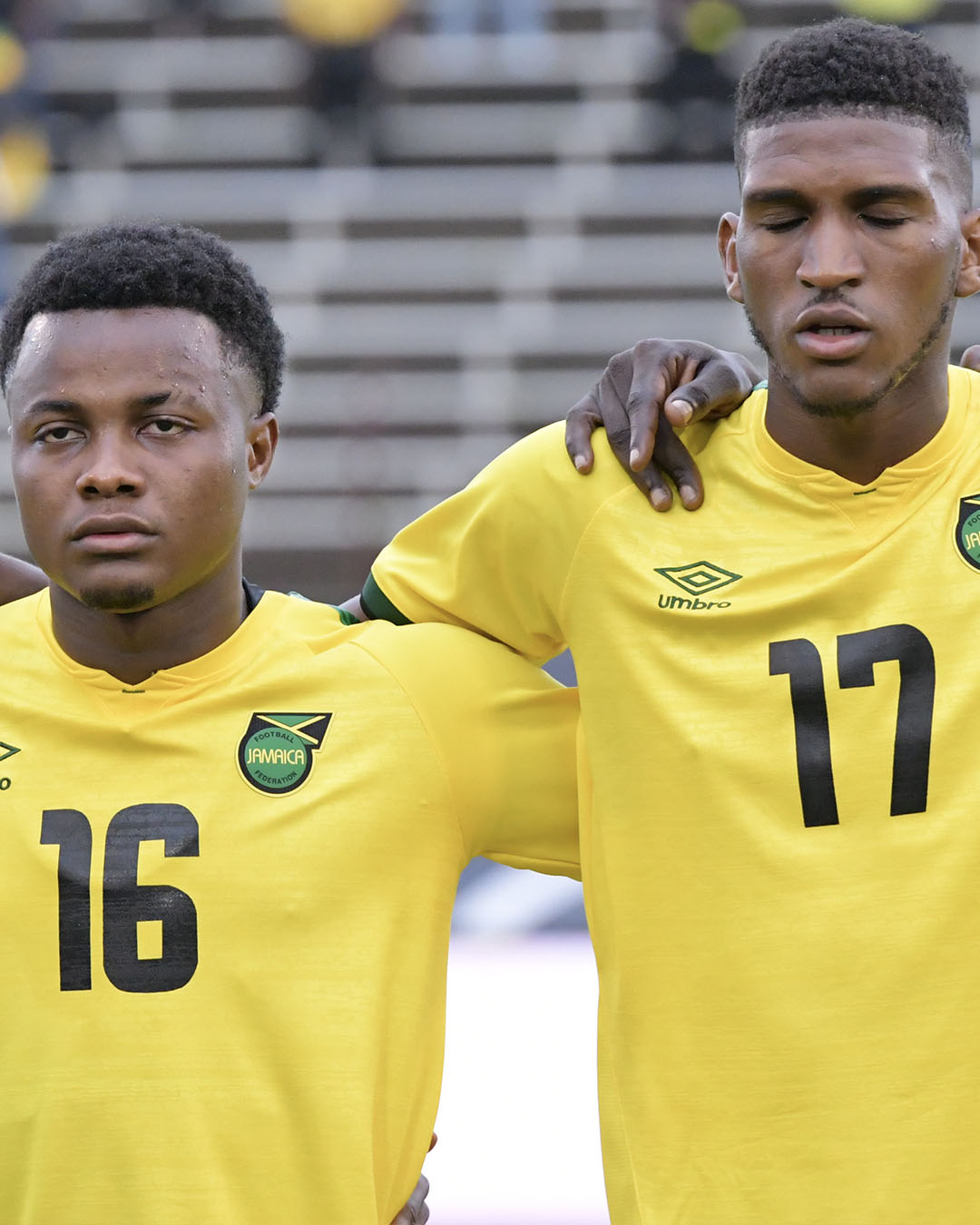
    And then there’s the dual-national question. The Reggae Boyz have increasingly relied on players born and raised abroad — in England, the United States, Canada — to fill the gaps in the squad. That’s not inherently a bad thing. Every Caribbean nation does it. But when your national team’s spine is built on players who grew up in a completely different football culture, you have to ask: what does that say about the system at home?

    The Women’s Game: Still an Afterthought

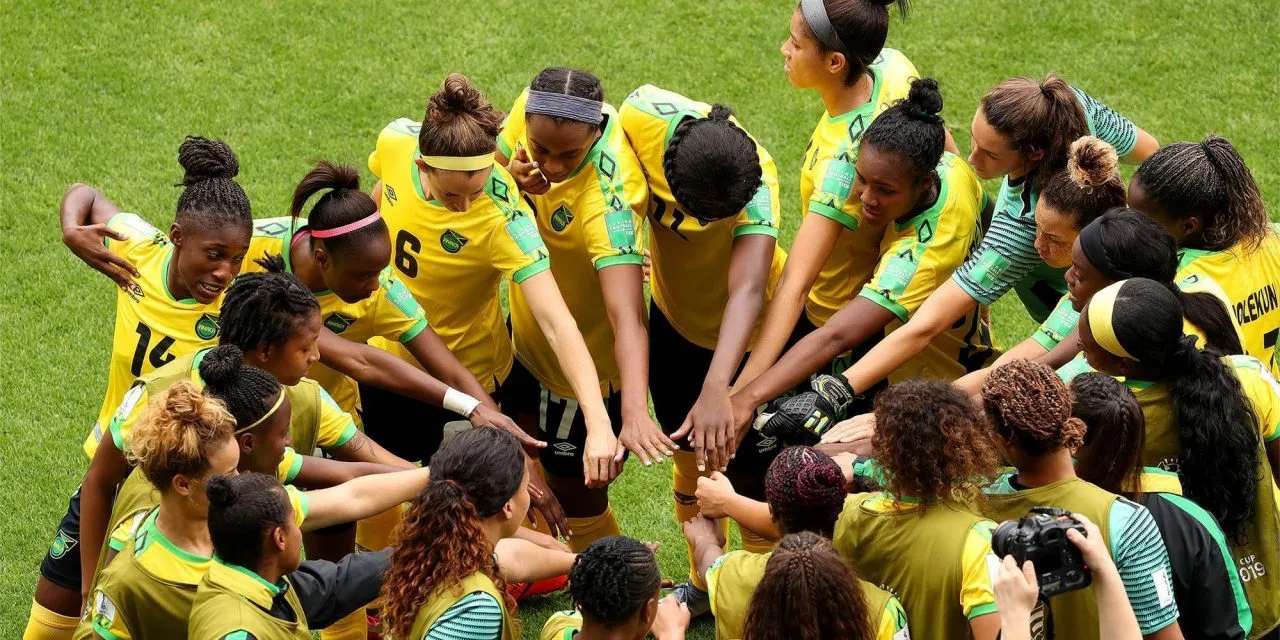
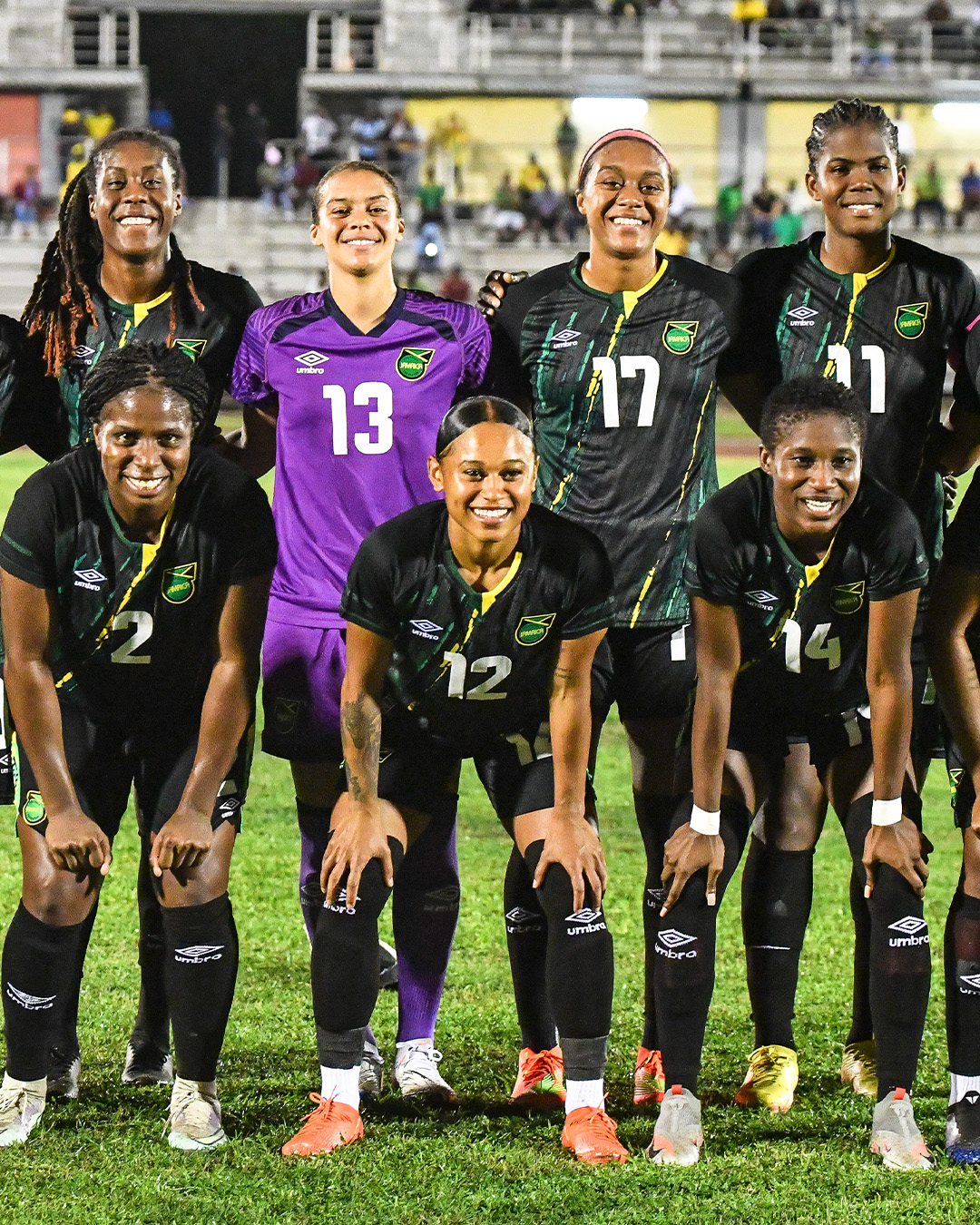
    Perhaps the most damning indictment of Jamaican football’s leadership is the treatment of the Reggae Girlz. Here is a programme that has produced a generational talent in Khadija Shaw — arguably the most prolific striker in women’s football worldwide — and has qualified for the FIFA Women’s World Cup. And yet, the support structure remains embarrassingly inadequate.

    The men’s programme receives the lion’s share of funding, attention, and institutional support. The women’s programme gets what’s left over, if anything at all. This isn’t just a moral failing. It’s a strategic one. The Reggae Girlz have proven they can compete on the world stage. Investing in them isn’t charity — it’s common sense.

    What Needs to Change

    We’ve been writing variations of this article for years now, and the solutions haven’t changed because the problems haven’t changed:

    Governance reform. The JFF needs genuine accountability — independent audits, transparent budgets, and term limits for officials who have been in their positions for far too long.

    Investment in infrastructure. You cannot develop footballers without proper facilities. Full stop. Every parish should have at least one facility that meets basic professional standards — a proper pitch, floodlights, changing rooms. This isn’t luxury. This is baseline.

    A living wage for JPL players. If you want the domestic league to be a genuine development pathway rather than a holding pen, players need to be able to survive on what they earn. The current wage structure is an insult to the profession.

    Parity for the women’s programme. Equal funding may not be realistic immediately, but a clear roadmap toward it — with measurable benchmarks and public reporting — would be a start.

    Youth development that starts earlier and lasts longer. The schoolboy system produces excitement but not necessarily professional-ready players. Structured academy programmes that bridge the gap between school and senior football are essential.

    The Bottom Line

    Jamaican football has all the raw ingredients — talent, passion, diaspora connections, and a fanbase that is desperate to believe. What it lacks is the institutional framework to turn those ingredients into consistent, sustainable success.

    Five years from now, we don’t want to be writing this article again. But unless the people in charge of Jamaican football start treating it like the multi-generational project it is — rather than a series of short-term fixes and photo opportunities — that’s exactly what will happen.

    Football on this island deserves better. The players deserve better. The fans deserve better. The question is whether the people with the power to change things actually want to.

    We’re watching. And we’re tired of waiting.

  • The JPL Wage Crisis: Why Jamaica’s Best Stay Home… Then Leave

    The JPL Wage Crisis: Why Jamaica’s Best Stay Home… Then Leave

    The Jamaica Premier League has a problem that everyone in Jamaican football knows about but nobody with the power to fix it seems willing to address head-on: the players can’t survive on what they earn.

    This isn’t a new issue. We’ve been writing about JPL wages for years. But the persistence of the problem — and the increasingly damaging consequences — demands that we keep saying it until something changes. Because right now, the league is caught in a cycle that is actively undermining Jamaican football’s development.

    The Numbers Don’t Work

    A JPL player’s match fees and monthly retainer — where they exist at all — add up to a sum that wouldn’t cover rent in Kingston, let alone support a family. Many players hold second jobs. Some can’t afford consistent transportation to training. The idea that these are professional athletes competing in a national premier league is, frankly, a fiction.

    Compare this to leagues of similar stature in the region. The Trinidad and Tobago Pro League pays modestly but consistently. The Canadian Premier League, while not lavish, offers contracts that allow players to focus full-time on football. Even some Central American leagues — in countries with comparable or lower GDP per capita — offer compensation that dwarfs what JPL players receive.

    The PFJL CEO has spoken publicly about the league’s growth ambitions and player pathway improvements. And credit where it’s due — there are people within the league structure who genuinely want to see things improve. But ambition without funding is just talk. And talk doesn’t pay rent.

    The Talent Drain

    The consequence of poverty-level wages is predictable and devastating: the best players leave as soon as they can. Some go abroad — to the USL, to lower divisions in Europe, to anywhere that offers a livable wage. Others leave football entirely, pursuing careers in fields where their talent and work ethic are actually compensated.

    This creates a perverse cycle. The league loses its best players, which reduces the quality of the product, which makes it harder to attract sponsors and broadcasters, which keeps revenues low, which keeps wages low, which drives more players away. It’s a death spiral, and breaking out of it requires deliberate, significant investment.

    The players who stay — and there are dedicated, passionate footballers who stay because they love the game and believe in the league — are essentially subsidising Jamaican football with their own poverty. That’s not dedication. That’s exploitation.

    The Club Model Is Broken

    The financial problems aren’t just about the league — they’re about the clubs. Most JPL clubs operate on shoestring budgets, dependent on the goodwill of one or two benefactors rather than sustainable business models. When a key sponsor pulls out or a benefactor loses interest, clubs can spiral into crisis overnight.

    There’s no centralized revenue-sharing model that ensures a minimum standard across the league. There’s no collective bargaining agreement that protects players’ basic rights. There’s no salary cap or salary floor that creates competitive balance while ensuring livable compensation.

    In other words, the JPL operates like a collection of independent projects rather than a unified league with shared standards and mutual accountability. Until that changes, the financial instability will persist.

    What a Minimum Wage Standard Could Look Like

    The solution doesn’t require JPL clubs to suddenly start paying EPL salaries. It requires a baseline — a minimum professional standard that ensures every player in the league can focus on football without wondering how they’ll eat.

    A minimum monthly salary — even a modest one by international standards — combined with mandatory health insurance, transportation allowances, and off-season support would transform the league overnight. It would signal to players, fans, and sponsors that the JPL takes itself seriously as a professional competition.

    Where does the money come from? A combination of sources: increased corporate sponsorship tied to a more professional product, government investment through the sports ministry, broadcast revenue from a properly structured media rights deal, and potentially international funding through FIFA’s development programmes.

    None of this is impossible. All of it requires political will.

    The Bigger Picture

    The JPL wage crisis isn’t just a football problem. It’s a reflection of how Jamaica values its athletes and its sporting culture. Track and field athletes can earn meaningful income through prize money and endorsements. Netball players seek contracts abroad. But for footballers who want to play at home, in front of their own fans, in their own league, the reward is poverty.

    If Jamaica is serious about football development — if the JFF’s strategic plans and the PFJL’s growth ambitions are more than PowerPoint presentations — then fixing the wage crisis has to be the foundation. Everything else — coaching, infrastructure, youth development, international competitiveness — is built on top of it.

    Pay the players. It’s not complicated. It’s just necessary.

  • The Reggae Boyz Midfield Problem Nobody Wants to Talk About

    The Reggae Boyz Midfield Problem Nobody Wants to Talk About

    Jamaica can defend. Jamaica can attack. But the space between those two things — the central midfield, the engine room, the heartbeat of any serious football team — has been a problem for the Reggae Boyz for years. And nobody in Jamaican football circles seems willing to have an honest conversation about it.

    We talk about the strikers. We talk about the centre-backs. We argue endlessly about which dual-national goalkeeper deserves the shirt. But the midfield? The area of the pitch that dictates tempo, controls possession, and separates good teams from teams that just survive? We gloss over it like it’s a minor detail.

    It isn’t. It’s the single biggest tactical deficiency holding Jamaica back.

    The Missing Number 8

    Every successful national team in CONCACAF has figured out its midfield identity. The United States built theirs around players who could press, recycle, and drive forward. Canada found a balance between defensive discipline and creative transition play. Mexico — for all their recent struggles — have always had midfielders who could keep the ball and dictate the rhythm of a game.

    Jamaica? We have destroyers. We have runners. What we don’t have — and haven’t had consistently for a long time — is a true number 8. A midfielder who can receive under pressure, turn, and play the pass that unlocks a defence. A player who makes the team tick, not just survive.

    Watch any Reggae Boyz match from the past few qualifying cycles and you’ll see the same pattern repeating. Jamaica sits deep, absorbs pressure, wins the ball — and then has no idea what to do with it. The transition from defence to attack is rushed, panicked, dependent on individual quality from wide players or a long ball over the top. There’s no composure through the middle. No controlled progression. No midfield platform that allows the attackers to breathe.

    The Tactical Consequences

    This isn’t just an abstract tactical gripe. It has tangible consequences in every competitive match Jamaica plays.

    Against weaker teams: Jamaica dominates territory but struggles to break down organised defences because there’s nobody in midfield who can find the killer pass or manipulate the defensive block with movement and passing combinations. Games that should be comfortable become slogs.

    Against stronger teams: Jamaica’s midfield gets overrun. The opposition controls possession, pushes Jamaica deeper, and the defensive block — no matter how disciplined — eventually cracks because it’s under constant siege. Without midfield control, the defenders get no respite.

    In transitions: This is where the gap is most visible. When Jamaica wins the ball, the next three seconds are chaos. There’s no midfield pivot who can calmly receive the turnover and make the right decision — whether that’s a quick forward pass, a switch of play, or simply keeping possession to allow the team to reorganise. Instead, the ball goes long, and the counterattack becomes a coin flip.

    How Canada and the USA Solved This

    The comparison with Jamaica’s CONCACAF rivals is instructive because both Canada and the United States faced similar identity crises in midfield — and both found solutions through smart recruitment and clear tactical philosophy.

    Canada’s rise to a World Cup qualifier was built on identifying dual-national players who filled specific tactical needs. They didn’t just recruit talent; they recruited profiles. Players who could do specific things in specific positions within a coherent system. The midfield was the priority because the coaching staff understood that without midfield control, nothing else works.

    The United States went through a generational shift, moving from a midfield built on workrate and athleticism to one that emphasised technical quality and positional intelligence. Young American midfielders emerged from European academies with the technical foundations to play in high-tempo environments. The national team coaching staff built systems that maximised those qualities.

    Jamaica has the dual-national pipeline. There are players of Jamaican heritage playing in midfield positions across English, American, and Canadian leagues. But the scouting and recruitment process hasn’t been targeted enough. It’s not enough to find Jamaicans playing abroad — you have to find Jamaicans playing abroad who solve specific tactical problems.

    The Domestic Development Gap

    The dual-national route is a short-term fix. The long-term solution has to come from domestic development — and here, the picture is bleak.

    Jamaican football culture rewards physicality, pace, and directness. Those are valuable qualities, but they’re not sufficient for producing creative midfielders. The schoolboy football system and the JPL both tend to favour a style of play that bypasses midfield rather than building through it. Young Jamaican midfielders learn to run, tackle, and compete — but they don’t always learn to receive under pressure, play with their back to goal, or execute the half-turn that separates a good midfielder from a special one.

    This is a coaching problem as much as a player development problem. If every team at every level plays direct football, then the players who emerge from that system will be direct footballers. The technically gifted midfielder — the one who wants to get on the ball in tight spaces and create — either adapts to the prevailing style or gets overlooked.

    Changing this requires a deliberate philosophical shift at every level of Jamaican football development. It means coaching programmes that value possession and creativity alongside physicality. It means academies that identify and nurture the quiet, technically gifted kid who might not be the fastest or the strongest but who sees passes that nobody else sees.

    The Head Coach’s Dilemma

    Every Jamaica head coach for the past decade has faced the same impossible puzzle: how do you compete in CONCACAF qualifiers — where the margins are razor-thin and every away match is a hostile environment — with a midfield that can’t control games?

    The pragmatic answer has been to bypass the problem. Sit deep, stay compact, use pace on the counter, and hope that individual brilliance from wide attackers or set-piece quality gets you a result. It’s not pretty, but it’s rational given the available personnel.

    The problem is that this approach has a ceiling. You can nick results against mid-tier CONCACAF opponents with this system. You cannot consistently beat the best teams. You cannot qualify for a World Cup. You cannot play the kind of football that attracts the best dual-national talent — players who want to play for a team with ambition, not just a team that survives.

    What Needs to Happen

    Three things, none of them easy:

    Targeted dual-national recruitment. Stop looking for the best available Jamaican-heritage players and start looking for the best available midfielders. The scouting network needs to be specifically tasked with identifying number 8 profiles — players who can receive, turn, progress, and dictate. This is more important than finding another winger or another centre-back.

    Domestic coaching reform. The JFF’s coaching education programmes need to emphasise midfield development as a specific focus area. Young coaches should be trained in how to develop creative midfielders, not just how to organise a defensive block or run a fitness session.

    A tactical identity that values midfield control. Jamaica’s national team needs a playing philosophy that goes beyond pragmatism. This doesn’t mean playing tiki-taka in the Azteca. It means having a clear plan for how the team builds from the back, how the midfield connects defence to attack, and what the team does in possession. Without that identity, every new coaching appointment starts from zero.

    The Bottom Line

    Jamaica’s midfield problem is the elephant in the room of Jamaican football. It’s the reason good defensive performances don’t translate into wins. It’s the reason individual attacking talent gets wasted. It’s the reason World Cup qualification remains a dream rather than a realistic target.

    Until we fix the engine room, the car isn’t going anywhere. And pretending otherwise — pointing to defensive records or individual highlights while ignoring the vacuum in the middle of the pitch — is just delaying the conversation we need to have.

    The midfield is the problem. Let’s talk about it.

  • What Jamaica Needs to Finally Qualify for a World Cup Again

    What Jamaica Needs to Finally Qualify for a World Cup Again

    It has been nearly three decades since Jamaica qualified for the FIFA World Cup. France 1998. The Reggae Boyz. That squad walked into the tournament as the most exciting story in world football — a small Caribbean island going toe-to-toe with the best on the planet. Losing to Argentina and Croatia, beating Japan, and making every Jamaican on earth feel ten feet tall.

    That was 1998. We haven’t been back.

    Not for lack of trying. Not for lack of talent. Not for lack of passion. But for a very specific set of structural, institutional, and strategic failures that have kept Jamaica on the outside looking in while CONCACAF rivals — some with arguably less natural talent — have moved forward.

    The 2026 World Cup in the United States, Mexico, and Canada changes the equation. The expanded 48-team format means more CONCACAF spots. The geographic proximity means home advantage. If Jamaica is ever going to get back to a World Cup, this is the window. And if we waste it, we might not get another one this favourable for a generation.

    Here’s what has to happen.

    Coaching Stability — Not Just Coaching Quality

    Jamaica has had good coaches. The problem isn’t that we’ve never hired anyone competent. The problem is that we’ve never given anyone enough time. The managerial carousel in Jamaican football is dizzying — coaches hired, coaches fired, coaches resigned, interim appointments, fresh starts that go nowhere because the fresh start gets discarded before it can take root.

    Look at the nations that have risen in CONCACAF over the past decade. Canada stuck with a coaching philosophy and let it mature. The United States went through a painful transition but eventually committed to an identity. Even smaller nations like Panama built consistency over multiple qualifying cycles.

    Jamaica needs a head coach — whether Jamaican or foreign — who is given a minimum four-year cycle and the backing to implement a genuine playing identity. Not a caretaker. Not an interim. A project leader with the authority to make unpopular decisions and the job security to survive the inevitable rough patches.

    The Dual-National Strategy Needs to Be Smarter

    Recruiting players of Jamaican heritage from England, the United States, and Canada has been a part of the Reggae Boyz strategy for decades. It’s not going away, and it shouldn’t — other nations do it, and the talent pool is genuine.

    But the approach needs to be more sophisticated. It’s not enough to identify fast wingers and centre-backs. Jamaica needs to recruit for tactical needs, not just talent. The midfield is the most obvious gap — finding creative, technically excellent midfielders who can control the tempo of a match should be the number one priority. Second is finding a genuine number nine who can lead the line in qualifying matches where Jamaica needs to break down deep defences.

    The recruitment process also needs to start earlier. By the time a dual-national is 25 and established in a European league, the competition for their international allegiance is fierce. Jamaica needs to be building relationships with 16, 17, 18-year-olds in academies — not just their agents, but the players themselves. Make them feel connected to Jamaica before another country locks them in.

    The JFF Must Reform or Get Out of the Way

    Every honest conversation about Jamaican football eventually arrives at the same destination: the Jamaica Football Federation. And the verdict is consistent — the federation’s governance structure is a barrier to progress, not a vehicle for it.

    This isn’t about individuals. It’s about systems. The JFF needs transparent budgets that are publicly available. It needs independent auditing. It needs term limits for officials. It needs a separation between political influence and sporting decisions. It needs a Director of Football with genuine authority — not just a title and a press conference, but the power to make binding decisions about coaching, player development, and squad selection processes.

    FIFA has development funding available for federations that demonstrate good governance and clear strategic plans. Jamaica leaves money on the table every cycle because the institutional framework doesn’t meet the standards that unlock those funds. That’s not bad luck. That’s bad governance.

    Youth Development: Build the Pipeline Properly

    The schoolboy football system in Jamaica is exciting, passionate, and produces moments of brilliance. What it doesn’t consistently produce is professional-ready footballers. The gap between schoolboy football and the Jamaica Premier League — and from the JPL to the national team — is enormous, and too many talented young players fall into it.

    A structured academy system — whether run by the JFF, by clubs, or by some combination — is essential. These academies need to do more than teach football. They need to develop the whole athlete: nutrition, physical conditioning, tactical education, mental preparation. They need to provide education pathways so that young players who don’t make it professionally aren’t left with nothing.

    The model exists. Countries with similar population sizes and economic profiles have built effective youth development systems. It requires investment, patience, and a willingness to prioritise long-term development over short-term results at the youth level.

    Infrastructure: You Can’t Build on Sand

    Jamaica’s football infrastructure is inadequate for a country with World Cup ambitions. Training facilities that would be considered substandard in most CONCACAF nations. Pitches that deteriorate during the rainy season. A national stadium that, while iconic, needs modernisation.

    Infrastructure investment isn’t glamorous and doesn’t generate headlines. But it’s the foundation that everything else is built on. Players can’t develop on bad pitches. Coaches can’t implement sophisticated training programmes without proper facilities. Youth academies can’t function without dedicated spaces.

    The government, the private sector, and the JFF all have roles to play here. A national football infrastructure plan — with specific targets, timelines, and funding commitments — should be a prerequisite for any serious World Cup qualification campaign.

    The JPL Must Become a Real Development League

    The Jamaica Premier League should be the primary development pathway for Reggae Boyz players. Right now, it’s not functioning as that. Wages are too low to attract and retain the best domestic talent. The quality of play is inconsistent. The relationship between the league and the national team programme is not structured to maximise player development.

    A stronger JPL — with better wages, better facilities, better coaching, and a genuine competitive standard — would give the national team a deeper pool of domestically based players to draw from. It would also make Jamaica a more attractive option for dual-nationals, who would see a country that takes its domestic football seriously.

    The Expanded Format Is an Opportunity — Not a Guarantee

    The 48-team World Cup means more CONCACAF spots. That’s a mathematical advantage for Jamaica. But it’s not a free pass. Other CONCACAF nations are improving too. Central American and Caribbean nations are investing in their programmes. The competition for those extra spots will be fierce.

    Jamaica cannot rely on the expanded format to paper over structural deficiencies. The extra spots lower the barrier, but Jamaica still has to clear it. And clearing it requires the kind of sustained, strategic, well-funded effort that this country has never committed to in football.

    The Manifesto

    Here it is, plain and simple:

    Appoint a long-term coach and give them real authority. No more revolving doors. No more political appointments. Find the right person, give them the job, and let them work.

    Recruit dual-nationals strategically. Identify tactical needs first, then find players who fill them. Start the relationship early. Make Jamaica the obvious choice, not the fallback option.

    Reform the JFF. Transparency, accountability, term limits, professional administration. If the current leadership can’t deliver this, replace them with people who can.

    Build a youth development system. Structured academies, qualified coaches, education pathways. Invest in 13-year-olds today to produce 23-year-old internationals tomorrow.

    Fix the infrastructure. Pitches, training facilities, a national stadium that meets modern standards. No shortcuts.

    Strengthen the JPL. Livable wages, competitive standards, a genuine pathway to the national team. Make the domestic league matter.

    None of this is revolutionary. Every successful football nation on the planet has done some version of this. The knowledge isn’t the problem. The execution is.

    Jamaica has the talent. Jamaica has the diaspora. Jamaica has the passion. What Jamaica has lacked — consistently, stubbornly, frustratingly — is the institutional commitment to turn those advantages into results.

    The 2026 World Cup is on our doorstep. The expanded format has opened the door wider than it’s ever been. The question isn’t whether Jamaica can qualify. It’s whether the people responsible for Jamaican football are willing to do what’s necessary to make it happen.

    We’ve been waiting since 1998. It’s time to stop waiting and start building.

  • The EPL Title Race: Why It’s Never Been More Unpredictable

    The EPL Title Race: Why It’s Never Been More Unpredictable

    There was a time — not that long ago — when you could predict the Premier League title race by September. The gap between the super clubs and everyone else was so vast that the season was essentially a coronation with extra steps. Two or three teams had the financial muscle, the squad depth, and the managerial quality to compete. Everyone else was playing for fourth.

    That era is over. And the Premier League is more compelling for it.

    The 2025-26 season has reinforced something that’s been building for several years: the English top flight is approaching a level of competitive balance that would have seemed impossible a decade ago. More clubs have the resources to compete. More managers have the tactical sophistication to punch above their weight. And the regulatory environment — specifically the evolution of financial fair play and profitability and sustainability rules — has begun to reshape the economics of the league in ways that narrow the advantages of the traditional elite.

    Financial Rules Changed the Game

    The introduction and enforcement of the Premier League’s Profitability and Sustainability Rules (PSR) is the single biggest structural change to the competitive landscape. For decades, the richest clubs could simply outspend their rivals into submission. Buy the best players, pay the highest wages, repeat until trophies arrive. The financial gap was the competitive gap.

    PSR hasn’t eliminated spending advantages — the biggest clubs still spend more — but it has introduced constraints that matter. Clubs can no longer run unlimited losses chasing success. Transfer fees and wages have to be balanced against revenue. And the penalties for non-compliance — points deductions, transfer embargoes — are severe enough that even wealthy owners think twice before writing blank cheques.

    The practical effect has been a compression of spending. The gap between the biggest spenders and the middle tier has narrowed. Clubs that were previously priced out of top-tier talent can now compete for the same players, because the traditional elite can’t simply outbid everyone by fifty percent anymore.

    The Coaching Revolution

    Money matters, but it’s not the only factor that determines competitiveness. The Premier League has experienced a quiet revolution in coaching quality over the past five years, and its effects are visible in the table.

    The days when mid-table clubs employed journeyman managers who played reactive, unambitious football are largely gone. The current generation of Premier League managers — across the table, not just at the top — are tactically sophisticated, analytically literate, and ambitious. They press. They build from the back. They have defined playing identities. They develop players.

    This matters because it means that well-coached teams with inferior squads can consistently take points off better-resourced opponents. The tactical margins have narrowed alongside the financial margins. A club with a good coach, a clear identity, and players who fit the system can compete with anyone on any given weekend — and increasingly over a full season.

    Squad Depth Is the New Battleground

    The modern Premier League season is an endurance test. Between the league, domestic cups, and European competition, top clubs play upwards of fifty matches a season. That volume of fixtures exposes a truth that financial dominance used to obscure: depth matters more than peak quality.

    It doesn’t matter if you have the best starting eleven in the league if your bench can’t maintain standards when injuries and fatigue inevitably hit. And this is where the traditional elite’s advantage has eroded most dramatically. Mid-table clubs have improved their depth. Recruitment analytics have helped smaller clubs identify undervalued players who can contribute at a high level. Loan markets and sell-on clauses have created more fluid player movement.

    The result is that the traditional top clubs can no longer assume they’ll have a significant depth advantage over the rest of the league. Some weeks, they will. But over a 38-game season, the cumulative effect of marginal improvements across the league is that nobody can coast.

    The Death of the Two-Horse Race

    Previous eras of the Premier League often boiled down to a two-team fight. Arsenal and Manchester United in the late 1990s and early 2000s. Chelsea and the rest after Abramovich arrived. Manchester City’s gradual ascent to dominance. Liverpool’s challenge under Klopp. In each case, the title race was fundamentally a bilateral contest with occasional interlopers.

    That model has broken down. The current landscape features multiple credible contenders — not just two. And critically, the identity of those contenders is less predictable from season to season. A club that finishes seventh one year can genuinely challenge for the top four the next, if they recruit well, keep their manager, and avoid injury crises.

    This unpredictability is the Premier League’s greatest commercial asset and its greatest sporting achievement. No fan base starts the season knowing their team can’t compete. That hope — even when it’s unrealistic — drives engagement, ticket sales, and broadcast interest in a way that a predictable league simply can’t match.

    The European Factor

    The Champions League and Europa League add another layer of complexity to the domestic title race. The expanded Champions League format means more matches, more travel, more fatigue, and more squad rotation. For the clubs competing in Europe, the domestic season becomes a juggling act — and some inevitably drop balls.

    For clubs not in European competition, the advantage is clear: a full week between Premier League matches to prepare, recover, and refine. That advantage accumulates over a season, and it’s one of the reasons why clubs on the periphery of European qualification often perform better domestically than clubs who are actually in Europe.

    The new Champions League format has amplified this dynamic. More group-stage matches mean more weeks where European clubs are playing midweek while domestic-only clubs are resting. Over 38 league games, that adds up.

    What This Means for the Jamaican Football Fan

    Let’s be real — the EPL is massive in Jamaica. Walk into any bar, barber shop, or taxi and you’ll find someone with a strong opinion about Arsenal, Manchester United, Liverpool, or Chelsea. The Premier League is the most-watched football competition on the island, and its unpredictability is part of what makes it so compelling for Jamaican audiences.

    But beyond the entertainment value, there’s a lesson here for Jamaican football. The EPL’s increased competitiveness wasn’t an accident. It was the product of structural changes — financial regulation, improved coaching standards, better recruitment practices — that deliberately narrowed the gap between rich and poor. The league didn’t just hope for competitive balance. It created the conditions for it.

    Jamaican football could learn from that approach. Competitive balance doesn’t emerge naturally. It has to be designed, enforced, and maintained. Whether it’s the Jamaica Premier League or the national team programme, the principle is the same: sustained structural investment produces better competition, which produces better players, which produces better results.

    The Verdict

    The Premier League title race in 2025-26 is the most unpredictable it’s been in the modern era. Financial regulation has compressed spending gaps. Coaching quality has spread across the table. Squad depth has become more evenly distributed. European competition has created fatigue-based advantages for domestic-only clubs.

    The result is a league where genuine surprises are not just possible but probable. Where the question in August isn’t just who will win the title? but how many teams will be in the race come March? Where every weekend produces results that shift the narrative.

    For fans — in Jamaica and around the world — this is the best version of the Premier League. Unpredictable, competitive, and endlessly debatable. Long may it last.

  • What Does It Actually Take to Win the Champions League in 2026?

    What Does It Actually Take to Win the Champions League in 2026?

    The Champions League isn’t what it used to be. And that’s not nostalgia talking — it’s a structural reality. The introduction of the Swiss-model format has fundamentally changed the demands of European club football’s premier competition. More matches. More opponents. More variables. More ways to get it right, and far more ways to get it wrong.

    So what does it actually take to win the Champions League in 2026? Not in theory. Not in the abstract. What are the tangible, measurable qualities that separate the eventual champion from the thirty-five other clubs who start the tournament believing they have a chance?

    We broke it down.

    Squad Depth Is No Longer Optional — It’s the Whole Point

    Under the old group-stage format, a strong starting eleven could carry you through six matches against three opponents. You’d face two or three genuinely difficult fixtures, navigate them with your best players, and rotate for the dead rubbers. The knockout rounds demanded peak performance, but the group stage was manageable with a thin squad.

    The Swiss model destroyed that calculation. Eight league-phase matches against eight different opponents — some of which are among the best teams in the world — means you cannot rely on eleven players anymore. Squad rotation isn’t a luxury. It’s a survival strategy.

    The clubs that have thrived in the new format are the ones with genuine depth at every position. Not just backup players who can fill in without embarrassment, but second-choice options who could start for most other teams in the competition. The quality gap between your starting eleven and your rotation players has to be marginal, not significant.

    This is where the financial elite still have an advantage — but even they have discovered that buying depth isn’t the same as having it. Chemistry, tactical understanding, and squad harmony matter as much as individual quality. The best squads aren’t collections of superstars — they’re ecosystems where every player understands their role, whether they start or come off the bench in the 65th minute.

    Tactical Flexibility: The Death of the Single System

    The old Champions League rewarded teams with a clear identity. Find your system, drill it relentlessly, and impose it on every opponent. Pep Guardiola’s Barcelona. Jose Mourinho’s Inter Milan. Zinedine Zidane’s Real Madrid. Each had a defined style that they executed to near-perfection.

    The new format demands something different: tactical chameleons. Eight league-phase opponents means eight different tactical challenges, and the teams that can adapt their approach match-by-match — or even within matches — have a massive advantage over those who try to play the same way regardless of context.

    This puts an enormous premium on coaching. The manager’s ability to read opponents, adjust formations, and prepare bespoke tactical plans for each fixture is more important than ever. It’s not enough to have a philosophy. You need a philosophy that’s flexible enough to accommodate multiple tactical expressions.

    Watch the teams that progress deepest into the tournament and you’ll notice a pattern: they don’t play the same way twice. They might press high against one opponent and sit deep against another. They might play with a back three on Wednesday and a back four on Saturday. The constants are principles — pressing triggers, build-up patterns, defensive organisation — but the specific tactical shape is variable.

    The Physical Toll: Managing the Unmanageable

    Here’s a number that should concern every Champions League contender: the total distance travelled by players competing in both the league phase and the knockout rounds is significantly higher than under the old format. More matches means more minutes, more miles, and more accumulated fatigue — physical, mental, and emotional.

    The sports science departments of Champions League clubs have become as strategically important as the coaching staff. Managing player loads across domestic and European competitions, making decisions about when to rest key players, monitoring biomarkers for injury risk, and designing recovery protocols that allow players to compete at peak intensity twice a week for months on end — this is the unglamorous work that determines Champions League outcomes.

    The clubs that get this wrong pay the price in April and May, when the knockout rounds demand the highest intensity at the exact moment when bodies are most vulnerable. Hamstring injuries in the quarter-finals. Muscle fatigue in the semi-finals. A starting midfielder who’s physically present but running on fumes in the final. The margins at this level are so small that a ten percent reduction in physical output can be the difference between winning and losing.

    Psychological Resilience: The Invisible Quality

    The Champions League has always been a mental test, but the new format has amplified the psychological demands. Eight league-phase matches mean more opportunities for adversity — unexpected defeats, controversial decisions, injuries to key players. The team that handles adversity best doesn’t just survive the league phase — they arrive in the knockouts with a psychological hardness that can’t be manufactured.

    The knockout rounds remain, fundamentally, a test of nerve. Home and away over two legs (except the final), with away goals no longer counting double but the pressure of a hostile environment still very real. The teams that win the Champions League are the ones that stay calm when the stadium is shaking, make the right decisions under extreme pressure, and treat moments of crisis as opportunities rather than catastrophes.

    This isn’t something you can buy or even coach in the traditional sense. It comes from experience, from culture, from having players who have been in high-pressure situations before and know — not think, know — that they can handle them. It’s the reason certain clubs seem to perform better in the Champions League than their domestic form would suggest. They have a winning culture in this competition that transcends individual talent.

    Set Pieces: The Great Equaliser

    One tactical dimension that has grown in importance in the new format is set-piece execution. When the margins between teams are tiny — and in the Champions League, they are — the ability to score from corners, free kicks, and throw-ins becomes a genuine competitive advantage.

    The best teams in the current Champions League cycle have invested heavily in set-piece coaching. Dedicated set-piece coaches, bespoke routines for specific opponents, and analytical frameworks that identify defensive vulnerabilities from dead-ball situations. It’s not glamorous, but it’s effective.

    The numbers bear this out. An increasing percentage of Champions League goals come from set pieces, and the teams that are most effective from dead balls tend to progress deeper into the tournament. In tight knockout ties — where open-play chances are scarce and defences are organised — a well-executed corner or free kick can be the decisive moment.

    The Manager Factor

    If there’s one consistent thread that connects every Champions League winner, it’s the quality of the manager. Not just their tactical acumen, but their ability to manage the entirety of a Champions League campaign — the squad, the schedule, the psychology, the media, the pressure.

    The Champions League is a nine-month campaign that requires different management skills at different stages. The league phase demands rotation and patience. The round of 16 demands intensity and preparation. The quarter-finals and semi-finals demand tactical brilliance and nerve. The final demands everything.

    The managers who win the Champions League are the ones who can navigate all of these phases without losing the squad’s trust, focus, or hunger. They make the right substitutions. They pick the right teams for the right matches. They say the right things in the dressing room at half-time when the tie is slipping away. They are, in the truest sense, the difference-makers.

    So What Does It Take?

    A squad with genuine depth at every position. A coaching staff that can adapt tactically match-by-match. A sports science programme that manages physical loads across a gruelling schedule. Players with the psychological resilience to thrive under pressure. Set-piece excellence. And a manager who can tie all of these threads together over nine months without losing the plot.

    Simple, right?

    The Champions League in 2026 is the most demanding it’s ever been. The Swiss model has raised the bar for every quality that matters — fitness, depth, adaptability, mentality. The club that lifts the trophy in May won’t just be the most talented. They’ll be the most complete. The most resilient. The most prepared.

    And that’s exactly how it should be. The biggest prize in club football should go to the team that masters every dimension of the game, not just the ones with the biggest chequebook. The new format has made the Champions League harder to win and more fascinating to watch. The cream still rises. But the cream has to be thicker than it’s ever been.

  • 5 Dual Nationals the Reggae Boyz Should Be Chasing in 2026

    5 Dual Nationals the Reggae Boyz Should Be Chasing in 2026

    The Reggae Boyz have always been a programme built on two pillars: homegrown talent from the Jamaican domestic system and overseas-born players of Jamaican heritage who choose to represent the island. That second pillar isn’t a luxury — it’s a necessity. And with World Cup qualifying heating up, the JFF needs to be aggressive, strategic, and relentless about identifying the right players to bring into the fold.

    Here are five player profiles the programme should be targeting right now — not names, because eligibility situations are complex and fluid, but types of players who would fill genuine gaps in the squad.

    1. The Championship-Level Centre-Back With Jamaican Roots

    This is priority number one. The Reggae Boyz have struggled for years to find consistent, commanding centre-back play at the international level. What Jamaica needs is a defender playing regularly in England’s Championship or a mid-table Bundesliga side — someone who has the physicality to deal with CONCACAF’s directness and the composure to play out from the back when the team needs to control possession.

    The ideal target is in his early-to-mid twenties. He’s been capped at youth level for his birth country but hasn’t made a senior appearance. He has a Jamaican parent or grandparent and has perhaps even spent summers on the island growing up. He’s good enough to play in a top league but not quite good enough to be a nailed-on starter for a major European national team — which means Jamaica represents a genuine opportunity to play competitive international football rather than sit on a bench hoping for a call-up that never comes.

    These players exist. Every window, you see centre-backs of Caribbean heritage playing across Europe’s second tiers who never get the call from their birth countries. Jamaica should be in their inboxes yesterday.

    2. The MLS Holding Midfielder

    Jamaica’s midfield has been a revolving door for too long. What the team desperately needs is a deep-lying midfielder who can shield the back four, circulate the ball under pressure, and set the tempo for the entire team. Think of the player who sits just in front of the defence and makes everything around him look organized.

    MLS is the hunting ground here. The league is full of technically competent midfielders of Jamaican descent — players born in South Florida, the New York metro area, Connecticut, or Toronto, raised in Jamaican households, who might never sniff a USMNT or Canadian squad but who would walk into Jamaica’s starting eleven.

    The profile: a number six who completes 88-90% of his passes, averages three or more interceptions per game, and brings the kind of quiet intelligence that transforms a disorganized midfield into a functional unit. Jamaica has had flair in the middle of the park before. What we’ve rarely had is control. This is the player who provides it.

    3. The Young English Winger Who Can’t Break Through

    English football’s academy system produces an absurd number of talented wide players every year. The vast majority of them never make it at their parent club. They go on loan, then another loan, then sign with a League One side, and their international career — for England, at least — is effectively over before it starts.

    Among those players, there are always a handful with Jamaican heritage. Quick, direct, comfortable on either flank, capable of beating a man one-on-one and delivering quality into the box. The kind of player who lit up the Under-20s but can’t get ahead of the senior squad’s established options.

    Jamaica should be monitoring every English academy’s output like a hawk. The ideal target is 20-23 years old, has represented England at youth level but sees the pathway to the senior team blocked by six or seven players ahead of him. He’s talented enough to play at Championship level or above, and he’s hungry — genuinely hungry — for competitive international football. Not a tourist who wants to wear the shirt for a few friendlies and disappear, but someone who sees Jamaica as his route to a World Cup.

    These conversations need to happen now, not six months before a tournament when it’s too late to integrate new players into the system.

    4. The Canadian-Jamaican Full-Back

    Canada’s football infrastructure has grown enormously over the past decade, and the Canadian development system — particularly in Ontario and British Columbia — is producing full-backs at an impressive rate. Athletic, tactically aware, comfortable getting forward and tracking back. Canada’s senior team can only pick so many of them.

    The player Jamaica needs is a modern full-back who can function as a wing-back in a back five or an overlapping full-back in a flat four. He’s quick enough to recover against pace, strong enough to handle the physical battles of CONCACAF, and technical enough to contribute in the final third. Left-footed is the priority — Jamaica has historically struggled more on the left side of defence than the right.

    The Canadian-Jamaican community is massive, and football is increasingly the sport of choice for young Caribbean-Canadians. The scouting network should be embedded in Canadian Premier League clubs and MLS academies, identifying players before they get locked into Canada’s senior programme. Once a player is cap-tied to Canada, they’re gone. The window closes fast.

    5. The Experienced MLS or Championship Goalkeeper

    Goalkeeping has been a persistent vulnerability for the Reggae Boyz. Not because Jamaica doesn’t produce shot-stoppers, but because the position demands a level of consistent, high-pressure experience that the JPL alone can’t provide. The national team needs a goalkeeper who has spent several seasons facing quality strikers every weekend — someone whose positioning, decision-making, and command of the box have been sharpened by hundreds of professional matches.

    The ideal target is 26-30, playing regularly in MLS or England’s Championship. He’s a solid number one at club level — not spectacular, but reliable. He communicates well, organises his defence, and doesn’t make the kind of individual errors that turn qualifying matches into disasters. He’s of Jamaican parentage, understands the culture, and sees representing Jamaica as more than a consolation prize.

    Finding this player would immediately stabilise the most important position on the pitch and give the defenders in front of him the confidence that comes from knowing the last line of defence is secure.

    The Bigger Picture

    Chasing dual nationals isn’t about abandoning the homegrown programme. It’s about being realistic. Jamaica is a nation of three million people competing in a confederation dominated by the United States, Mexico, and Canada — countries with vastly larger populations, bigger budgets, and deeper domestic leagues. The Jamaican diaspora is a competitive advantage, and failing to leverage it is sporting malpractice.

    But the approach needs to be strategic, not desperate. Every dual-national target should fill a specific positional need. Every conversation should be genuine — built on respect, a clear sporting project, and an honest assessment of what the player will gain from choosing Jamaica. Nobody wants mercenaries. The programme wants players who want to be Reggae Boyz.

    The JFF needs a dedicated dual-national scouting operation — not one overworked staff member scrolling through Transfermarkt, but a proper network embedded in the leagues and communities where these players exist. England, the United States, Canada, and increasingly continental Europe. The talent is there. The question is whether Jamaica has the institutional ambition to go and get it.

    World Cup qualifying won’t wait. These five positions represent genuine needs in the squad, and somewhere in the football world, there are five players of Jamaican heritage who could fill them. Find them. Convince them. And give the Reggae Boyz the depth they need to compete.

  • The Problem With JPL Venues Hasn’t Gone Away

    The Problem With JPL Venues Hasn’t Gone Away

    Walk into almost any Jamaica Premier League match on a given weekend and you’ll see the same thing: a pitch that ranges from acceptable to embarrassing, spectators crammed into stands that were built for a different era, floodlights that may or may not work properly, and broadcast cameras trying to make the whole thing look like professional football. It’s a testament to the league’s resilience that it functions at all. But functioning and thriving are two very different things.

    The JPL’s venue problem isn’t new. We’ve been writing about it for years. What’s frustrating is that nothing of substance has changed — and the cost of inaction is getting harder to ignore.

    What Professional Standards Actually Look Like

    Let’s start with what a professional football venue should provide at minimum: a well-maintained natural or hybrid pitch with consistent playing surface; covered seating for at least a portion of spectators; functional and reliable floodlighting; proper changing rooms with adequate facilities for players and match officials; a media centre or at least designated broadcast positions; and basic spectator amenities — clean toilets, food concessions, and accessible entry points.

    How many JPL venues meet all of those criteria? You can count them on one hand and have fingers left over. The National Stadium in Kingston is the closest thing to a proper ground, and even it has aged considerably. Sabina Park serves primarily as a cricket venue. Beyond those, most JPL teams play at municipal grounds that were never designed for professional sport.

    This isn’t about demanding Premier League-level facilities. Nobody expects a 40,000-seat stadium with undersoil heating in Clarendon. But the gap between what currently exists and what would constitute a baseline professional standard is enormous — and it affects everything.

    The Attendance Problem

    Jamaica loves football. The passion is real, it’s deep, and it’s visible every time the Reggae Boyz play at the National Stadium. So why do JPL matches regularly draw crowds in the hundreds rather than thousands?

    Venues are a massive part of the answer. People don’t want to sit in uncovered bleachers in 35-degree heat with no shade, no proper food options, and no guarantee that the match will even kick off on time because the pitch is waterlogged. The matchday experience at most JPL grounds is, frankly, hostile to the casual fan. And casual fans are exactly the people the league needs to convert into regulars.

    Compare this to what’s happening in Trinidad and Tobago, where the Ato Boldon Stadium has provided a purpose-built facility for domestic football that actually feels like a venue you’d want to visit. Or Barbados, which has invested in multi-sport facilities that serve both community and professional needs. These aren’t wealthy nations — they’re Caribbean neighbours operating under similar economic constraints. They’ve just chosen to prioritise their sporting infrastructure in ways that Jamaica hasn’t.

    The Broadcast Problem

    Television and streaming have become the primary revenue drivers for football leagues around the world. Even at the domestic level, broadcast deals can transform a league’s financial sustainability. But here’s the thing: broadcasters need a minimum standard of visual quality to justify covering a league. And JPL venues regularly fall short.

    Poor floodlighting creates uneven lighting conditions that make footage look amateurish. Inconsistent pitch quality affects the visual product. Lack of proper camera positions limits the angles available to production crews. All of this contributes to a broadcast product that struggles to compete for attention — not just against the EPL or La Liga, but against other Caribbean leagues that have invested more seriously in their presentation.

    If the JPL wants to attract serious broadcast investment, the venues have to look the part. No broadcaster is going to pay premium rates for footage that looks like it was shot at a community kickabout.

    What Success Looks Like Elsewhere

    Several Caribbean nations have demonstrated that stadium development is achievable with the right combination of political will, private investment, and community engagement.

    The Dominican Republic, not traditionally a football powerhouse, has invested in multi-purpose sporting facilities that serve both domestic leagues and international events. Guyana’s Providence Stadium, built for cricket but adapted for football, shows how multi-sport venues can serve multiple purposes. Suriname has upgraded its primary football ground to meet FIFA standards, opening the door to hosting international matches and the revenue that comes with them.

    The common thread in all these cases is that someone — government, private sector, or both — decided that sporting infrastructure was a priority rather than a nice-to-have. Jamaica has the economic base, the sporting culture, and the institutional capacity to do the same. What it has lacked is the sustained political and administrative will to make it happen.

    A Vision for the JPL Matchday

    Imagine this: a JPL match at a 5,000-seat community stadium with covered stands, a properly maintained pitch, reliable floodlights, and a concession area selling local food. The match is broadcast in high definition. Families are there — kids in jerseys, parents with season tickets. The atmosphere is electric, not because the venue is luxurious, but because it’s dignified. Because the experience respects the fans, the players, and the sport.

    That’s not a fantasy. It’s what a well-run football nation at Jamaica’s level should be delivering as standard. You don’t need to build 14 new stadiums. You need three or four proper venues spread across the island — Kingston, Montego Bay, Mandeville, perhaps Spanish Town — that rotate hosting duties and give the JPL a presentable shop window.

    Start with two. Refurbish existing grounds to meet a defined professional standard. Mandate that JPL matches can only be played at approved venues. Give clubs a three-year timeline to upgrade or share a venue with a neighbouring team. Make it non-negotiable.

    The Cost of Doing Nothing

    Here’s what happens if the venue problem continues to be kicked down the road: the JPL remains a league that talented Jamaican players leave at the earliest opportunity, because the conditions don’t match their ambitions. Attendance stays flat or declines further. Broadcast revenue remains negligible. Sponsors stay away because the product doesn’t offer the visibility or prestige they need. And the league — which should be the foundation of Jamaican football development — continues to operate as an afterthought rather than a cornerstone.

    Meanwhile, the same fans who shrug off the JPL will pack the National Stadium for a Reggae Boyz qualifier and wonder why Jamaica can’t produce more world-class players from its own system. The two things are connected. You cannot develop professional footballers in unprofessional conditions.

    The venue problem hasn’t gone away. It won’t go away on its own. And every year that passes without action makes the eventual solution more expensive and the damage to the league’s credibility harder to reverse.

    Somebody needs to decide that this matters. And then actually do something about it.

  • Financial Fair Play Is Reshaping English Football

    Financial Fair Play Is Reshaping English Football

    For years, the Premier League operated under a simple and brutal logic: spend more, win more. The richest clubs hoovered up the best players, the best managers, and the best infrastructure, while everyone else fought for scraps and prayed for a miracle. Financial Fair Play was supposed to be the corrective. The guardrails that would stop football from eating itself. And after years of vague enforcement and loopholes you could drive a bus through, the rules are finally starting to bite.

    The question is whether they’re biting the right people — and whether the cure might be worse than the disease.

    What the Rules Actually Say

    The Premier League’s Profitability and Sustainability Rules (PSR) — the English football version of UEFA’s broader Financial Fair Play framework — limit how much money clubs can lose over a rolling three-year period. The threshold has been set at a maximum allowable loss that forces clubs to at least pretend they’re running a business rather than a billionaire’s hobby.

    On the surface, this sounds reasonable. Football clubs shouldn’t be burning through unlimited cash with no accountability. Sustainable business models benefit the entire ecosystem — players get paid, staff keep their jobs, communities retain their clubs. Nobody wants another Bury, another Wigan, another cautionary tale of financial ruin dressed up as ambition.

    But the implementation has been far more complicated than the principle. And the consequences are reshaping how English football operates in ways that nobody fully anticipated.

    The Squad-Building Impact

    The most visible effect of PSR has been on the transfer market. Clubs that previously would have spent freely in January or summer windows are now making decisions with one eye on the spreadsheet and the other on the pitch. The days of panic-buying a striker for an inflated fee in the final hours of deadline day aren’t over — football will always have its moments of irrationality — but they’re becoming rarer and more risky.

    What’s emerged instead is a market dominated by creative accounting. Clubs are structuring transfer fees as amortised payments spread over the length of a player’s contract, meaning a purchase that costs a club a significant sum is recorded as a much smaller annual expense. Sell-on clauses, loan-with-obligation-to-buy arrangements, and swap deals have all become more common — not because they’re better for football, but because they’re better for the balance sheet.

    The result is a transfer market that’s become more opaque, more complex, and arguably more vulnerable to manipulation than the old system of straightforward cash transactions. The spirit of PSR is about sustainability. The reality is that clubs are employing armies of financial advisors to technically comply while spending just as aggressively as before.

    Winners and Losers

    Every regulatory framework creates winners and losers, and PSR is no exception. The biggest winners are clubs with massive commercial revenues — the established super-clubs whose global brand deals, broadcasting income, and matchday revenue give them the financial headroom to spend within the rules while still outpacing everyone else. When your revenue is enormous, the spending limits barely constrain you.

    The biggest losers are the ambitious mid-table clubs and newly promoted sides trying to close the gap. These are the clubs that historically would have invested heavily to break into the top tier, accepting short-term losses for long-term competitive gains. PSR makes that strategy legally dangerous. Spend too aggressively, and you face points deductions that can wipe out an entire season’s worth of results on the pitch.

    The irony is unmistakable: regulations designed to create competitive balance may actually be entrenching the existing hierarchy. The rich stay rich because they built their revenue streams before the rules existed. The challengers are told to wait their turn — but in football, waiting your turn usually means never getting there at all.

    The European Context

    The Premier League’s PSR doesn’t exist in isolation. UEFA’s own Financial Fair Play regulations — rebranded as Financial Sustainability Regulations — apply to every club competing in European competition. The European framework has its own thresholds, its own enforcement mechanisms, and its own history of controversy.

    What’s becoming clear is that the patchwork of domestic and continental regulations creates an uneven playing field across Europe. Clubs in leagues with more lenient financial oversight can outspend their English counterparts without facing the same consequences. A mid-level club in a league with weaker enforcement can leverage resources in ways that a similarly positioned Premier League club cannot, simply because the rules are different.

    This has implications for the transfer market, for European competition, and for the long-term competitive position of English clubs in continental tournaments. If the Premier League’s PSR is significantly stricter than what’s enforced elsewhere, English clubs may find themselves at a structural disadvantage in the Champions League and Europa League — not because they lack resources, but because the rules prevent them from deploying those resources as aggressively as their European rivals.

    The Enforcement Question

    Rules are only as meaningful as their enforcement, and the Premier League’s track record on this front has been uneven at best. High-profile cases involving major clubs have dragged on for years, with legal challenges, procedural disputes, and public confusion about what the consequences actually are. When one club receives a significant points deduction and another in a seemingly similar situation faces a lesser penalty — or no penalty at all — it breeds cynicism about whether the rules are being applied fairly.

    The Premier League’s independent commission system is still finding its feet, and the legal teams employed by wealthy clubs are exceptionally good at finding procedural angles to delay or reduce sanctions. This isn’t unique to football — any regulatory system faces pushback from well-resourced subjects — but the public nature of football means that every enforcement action (or lack thereof) plays out in front of millions of passionate, opinionated observers.

    If fans lose faith in the fairness of enforcement, the entire framework loses legitimacy. And without legitimacy, the rules become performative rather than transformative.

    What This Means for the Wider Game

    For Caribbean football watchers, the FFP landscape matters more than you might think. The transfer fees and wage structures in the Premier League cascade down through the global football economy. When English clubs spend differently, it changes the market for players at every level — including the developing leagues where Jamaican and Caribbean players are trying to build careers.

    If mid-tier Premier League clubs are forced to look for value rather than spending extravagantly, that could actually create more opportunities for players from smaller markets. A club that can’t afford to buy a proven international might take a chance on a younger, cheaper alternative from the JPL or another Caribbean league. It’s a long shot, but the economics of PSR may inadvertently open doors that the old free-spending model kept shut.

    The Verdict

    Financial Fair Play, in its current form, is a well-intentioned but imperfect system. It has curbed the most egregious excesses of unchecked spending, and it has forced clubs to think more carefully about long-term sustainability. Those are genuine achievements.

    But it has also created a two-tier system where established wealth is protected and aspiring clubs are penalised for trying to compete. It has made the transfer market more opaque and more susceptible to financial engineering. And its enforcement has been inconsistent enough to undermine public confidence in its fairness.

    English football needed regulation. What it got was a framework that’s still being debugged in real time, with real consequences for real clubs and real fans. The reshaping isn’t done. The question is whether the final shape will be one that actually serves the sport — or just serves the clubs that were already on top.

  • The Champions League’s New Format: Better or Worse?

    The Champions League’s New Format: Better or Worse?

    When UEFA announced the Swiss model for the Champions League, the reaction was split cleanly down the middle. Reformers hailed it as a necessary evolution — more big matches, more competitive intrigue, a format fit for the modern era. Traditionalists warned it was bloated, confusing, and designed to serve broadcasters rather than fans. Now that we’ve had real time to evaluate the new system in action, it’s time to deliver a verdict.

    And the verdict is: it’s worse. Not catastrophically worse. Not ruin-the-sport worse. But worse.

    The Promise vs. the Reality

    The pitch was seductive. Instead of a predictable group stage where the big clubs almost always qualified and the small clubs almost always went home, every team would play eight matches against eight different opponents. No more dead-rubber group games between sides with nothing to play for. No more mismatches that were over before halftime. Just wall-to-wall competitive football from September to January.

    In practice? The league phase has delivered some of that. The variety of opponents is genuinely refreshing — seeing top clubs face unfamiliar adversaries rather than the same three group opponents creates matchups that feel novel. The expanded fixture list means more European nights, more drama, more moments that make the Champions League the most compelling club competition in the world.

    But it’s also delivered something else: an overwhelming volume of football that dilutes rather than concentrates the competition’s emotional power.

    More Football, Less Meaning

    Here’s the fundamental problem. The old Champions League group stage had its flaws — dead rubbers, predictable outcomes, the occasional farcical final matchday — but it also had clarity. Six matches. Four teams. Top two advance. Everyone understood it. Every result mattered within a comprehensible context.

    The Swiss model replaces that clarity with complexity. Thirty-six teams in a single league table, each playing eight matches against different opponents, with the top eight qualifying automatically and the next sixteen entering a playoff round. It’s a system that requires a spreadsheet to follow and a statistics degree to fully understand.

    For the hardcore fan who lives and breathes the Champions League, that complexity is part of the appeal. But the Champions League isn’t just for hardcore fans. It’s the most-watched club competition on the planet, and its magic has always been rooted in simplicity — two teams, one night, everything on the line. The Swiss model hasn’t destroyed that magic in the knockout rounds, but it’s muddied it considerably in the league phase.

    Ask a casual fan to explain how the league phase standings work. Ask them why some teams have played harder schedules than others. Ask them what the tiebreaker criteria are. You’ll get blank stares. And blank stares are the enemy of engagement.

    The Fan Experience Problem

    This is where the new format fails most obviously. More matches means more travel, more expense, and more midweek commitments for supporters who already struggle to balance football fandom with work, family, and financial reality. An away trip to watch your club in the Champions League is supposed to be special — a pilgrimage, a memory that lasts a lifetime. When there are four away fixtures in the league phase instead of three, spread across a wider geographic range, the cost becomes prohibitive for many supporters.

    The clubs love it, of course. More home matches mean more matchday revenue. More fixtures mean more broadcast windows. More content for the content machine that modern football has become. UEFA loves it too — more matches mean more inventory to sell to sponsors and broadcasters.

    But the people who actually create the atmosphere — the travelling fans who make Champions League nights feel different from ordinary Tuesday football — are being priced and scheduled out of the experience. A Champions League without full away sections isn’t a Champions League worth having. And the new format pushes in exactly that direction.

    The Competitive Balance Illusion

    One of the selling points of the Swiss model was that it would create more competitive uncertainty. No more groups of death where good teams eliminated each other while weaker teams sailed through easy groups. The single league table would reward consistency and ensure that the best teams advanced on merit.

    The reality is more nuanced. Because teams play different opponents, the league table is inherently imperfect as a measure of relative quality. A team that draws a favourable set of fixtures has a structural advantage over a team that faces a gauntlet of top sides. The strength-of-schedule problem — well understood in American sports but relatively new to European football — introduces a randomness that the format was supposed to eliminate.

    And the safety net of the playoff round — where 9th through 24th place enter a two-legged tie for the right to join the knockout stages — means that finishing badly in the league phase isn’t necessarily punished. Big clubs with slow starts can recover through the playoffs. Which sounds fair on paper, but in practice means that the league phase results matter less than advertised. If you can finish 20th and still reach the Round of 16, how much do individual league-phase results really mean?

    What It Gets Right

    Credit where it’s due. The new format isn’t without merit. The knockout rounds remain spectacular — arguably more so, because the playoff round creates additional high-stakes ties that didn’t exist before. The matchday variety is genuine. Seeing clubs from different leagues face each other for the first time in years (or ever) produces moments of genuine novelty that the old group stage rarely delivered.

    The format has also been kinder to smaller clubs in some respects. Under the old system, a team from a minor league would be drawn into a group with three vastly superior opponents and lose every game. Under the Swiss model, their eight fixtures include some against opponents of comparable quality, giving them realistic chances of picking up results and extending their European campaign. That’s a meaningful improvement for the sport’s broader ecosystem.

    And the final day of the league phase, with all fixtures played simultaneously and positions shifting in real time across the entire 36-team table, has produced genuinely thrilling television. As a spectacle, it works. Whether it works as a sport — where results are earned through consistent performance rather than the chaos of a single evening — is another question entirely.

    The Caribbean Perspective

    For Caribbean football fans — and Jamaicans in particular — the Champions League is appointment viewing. It’s the competition that showcases the highest level of club football on the planet, and it’s where our players dream of competing. The format change doesn’t alter that fundamental appeal. Great football is great football, regardless of whether it comes wrapped in a group stage or a league phase.

    But the bloating of the schedule is a real concern for fans in our time zone. More midweek fixtures, more meaningless-seeming league-phase matches, more content to sort through to find the matches that actually matter. In a region where fans already sacrifice sleep and productivity to watch European football, asking them to care about 189 league-phase matches instead of 96 group-stage matches is a big ask.

    The Bottom Line

    The Champions League’s new format gives us more football. It does not give us better football. It creates complexity where there was clarity, volume where there was intensity, and a schedule that serves commercial interests more effectively than it serves the sport or its supporters.

    The knockout rounds remain untouchable — the format change hasn’t damaged the part of the competition that produces the iconic moments and legendary performances. But the path to get there has become longer, more confusing, and more expensive for the fans who make it all worthwhile.

    UEFA got what it wanted: more product to sell. Football got something it didn’t need: more of itself. And somewhere in the gap between those two outcomes lies the answer to whether the Champions League’s new format is better or worse.

    It’s worse. Not broken. Not ruined. But worse.