Tag: Tactics

  • The Reggae Boyz Midfield Problem Nobody Wants to Talk About

    The Reggae Boyz Midfield Problem Nobody Wants to Talk About

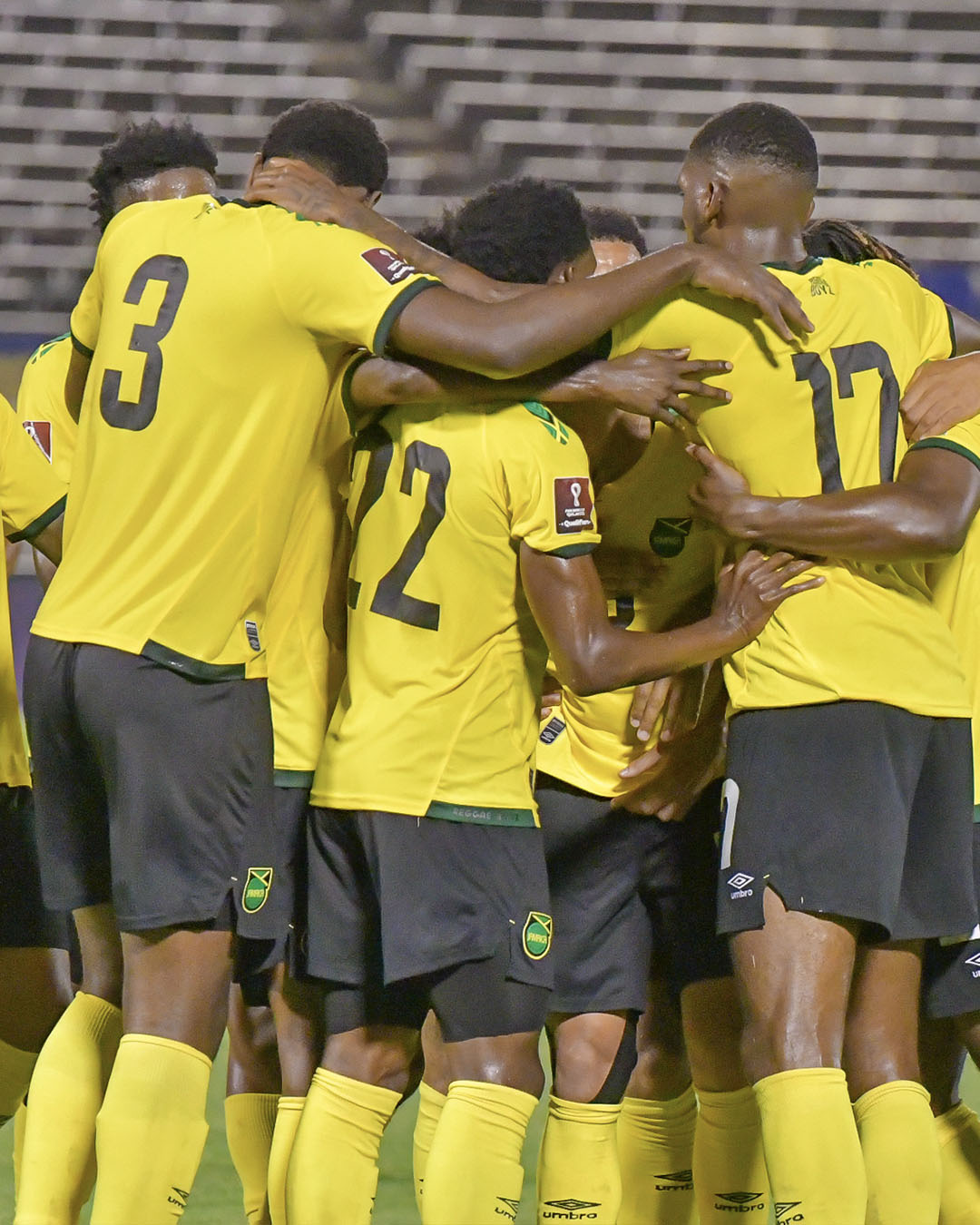
    Jamaica can defend. Jamaica can attack. But the space between those two things — the central midfield, the engine room, the heartbeat of any serious football team — has been a problem for the Reggae Boyz for years. And nobody in Jamaican football circles seems willing to have an honest conversation about it.

    We talk about the strikers. We talk about the centre-backs. We argue endlessly about which dual-national goalkeeper deserves the shirt. But the midfield? The area of the pitch that dictates tempo, controls possession, and separates good teams from teams that just survive? We gloss over it like it’s a minor detail.

    It isn’t. It’s the single biggest tactical deficiency holding Jamaica back.

    The Missing Number 8

    Every successful national team in CONCACAF has figured out its midfield identity. The United States built theirs around players who could press, recycle, and drive forward. Canada found a balance between defensive discipline and creative transition play. Mexico — for all their recent struggles — have always had midfielders who could keep the ball and dictate the rhythm of a game.

    Jamaica? We have destroyers. We have runners. What we don’t have — and haven’t had consistently for a long time — is a true number 8. A midfielder who can receive under pressure, turn, and play the pass that unlocks a defence. A player who makes the team tick, not just survive.

    Watch any Reggae Boyz match from the past few qualifying cycles and you’ll see the same pattern repeating. Jamaica sits deep, absorbs pressure, wins the ball — and then has no idea what to do with it. The transition from defence to attack is rushed, panicked, dependent on individual quality from wide players or a long ball over the top. There’s no composure through the middle. No controlled progression. No midfield platform that allows the attackers to breathe.

    The Tactical Consequences

    This isn’t just an abstract tactical gripe. It has tangible consequences in every competitive match Jamaica plays.

    Against weaker teams: Jamaica dominates territory but struggles to break down organised defences because there’s nobody in midfield who can find the killer pass or manipulate the defensive block with movement and passing combinations. Games that should be comfortable become slogs.

    Against stronger teams: Jamaica’s midfield gets overrun. The opposition controls possession, pushes Jamaica deeper, and the defensive block — no matter how disciplined — eventually cracks because it’s under constant siege. Without midfield control, the defenders get no respite.

    In transitions: This is where the gap is most visible. When Jamaica wins the ball, the next three seconds are chaos. There’s no midfield pivot who can calmly receive the turnover and make the right decision — whether that’s a quick forward pass, a switch of play, or simply keeping possession to allow the team to reorganise. Instead, the ball goes long, and the counterattack becomes a coin flip.

    How Canada and the USA Solved This

    The comparison with Jamaica’s CONCACAF rivals is instructive because both Canada and the United States faced similar identity crises in midfield — and both found solutions through smart recruitment and clear tactical philosophy.

    Canada’s rise to a World Cup qualifier was built on identifying dual-national players who filled specific tactical needs. They didn’t just recruit talent; they recruited profiles. Players who could do specific things in specific positions within a coherent system. The midfield was the priority because the coaching staff understood that without midfield control, nothing else works.

    The United States went through a generational shift, moving from a midfield built on workrate and athleticism to one that emphasised technical quality and positional intelligence. Young American midfielders emerged from European academies with the technical foundations to play in high-tempo environments. The national team coaching staff built systems that maximised those qualities.

    Jamaica has the dual-national pipeline. There are players of Jamaican heritage playing in midfield positions across English, American, and Canadian leagues. But the scouting and recruitment process hasn’t been targeted enough. It’s not enough to find Jamaicans playing abroad — you have to find Jamaicans playing abroad who solve specific tactical problems.

    The Domestic Development Gap

    The dual-national route is a short-term fix. The long-term solution has to come from domestic development — and here, the picture is bleak.

    Jamaican football culture rewards physicality, pace, and directness. Those are valuable qualities, but they’re not sufficient for producing creative midfielders. The schoolboy football system and the JPL both tend to favour a style of play that bypasses midfield rather than building through it. Young Jamaican midfielders learn to run, tackle, and compete — but they don’t always learn to receive under pressure, play with their back to goal, or execute the half-turn that separates a good midfielder from a special one.

    This is a coaching problem as much as a player development problem. If every team at every level plays direct football, then the players who emerge from that system will be direct footballers. The technically gifted midfielder — the one who wants to get on the ball in tight spaces and create — either adapts to the prevailing style or gets overlooked.

    Changing this requires a deliberate philosophical shift at every level of Jamaican football development. It means coaching programmes that value possession and creativity alongside physicality. It means academies that identify and nurture the quiet, technically gifted kid who might not be the fastest or the strongest but who sees passes that nobody else sees.

    The Head Coach’s Dilemma

    Every Jamaica head coach for the past decade has faced the same impossible puzzle: how do you compete in CONCACAF qualifiers — where the margins are razor-thin and every away match is a hostile environment — with a midfield that can’t control games?

    The pragmatic answer has been to bypass the problem. Sit deep, stay compact, use pace on the counter, and hope that individual brilliance from wide attackers or set-piece quality gets you a result. It’s not pretty, but it’s rational given the available personnel.

    The problem is that this approach has a ceiling. You can nick results against mid-tier CONCACAF opponents with this system. You cannot consistently beat the best teams. You cannot qualify for a World Cup. You cannot play the kind of football that attracts the best dual-national talent — players who want to play for a team with ambition, not just a team that survives.

    What Needs to Happen

    Three things, none of them easy:

    Targeted dual-national recruitment. Stop looking for the best available Jamaican-heritage players and start looking for the best available midfielders. The scouting network needs to be specifically tasked with identifying number 8 profiles — players who can receive, turn, progress, and dictate. This is more important than finding another winger or another centre-back.

    Domestic coaching reform. The JFF’s coaching education programmes need to emphasise midfield development as a specific focus area. Young coaches should be trained in how to develop creative midfielders, not just how to organise a defensive block or run a fitness session.

    A tactical identity that values midfield control. Jamaica’s national team needs a playing philosophy that goes beyond pragmatism. This doesn’t mean playing tiki-taka in the Azteca. It means having a clear plan for how the team builds from the back, how the midfield connects defence to attack, and what the team does in possession. Without that identity, every new coaching appointment starts from zero.

    The Bottom Line

    Jamaica’s midfield problem is the elephant in the room of Jamaican football. It’s the reason good defensive performances don’t translate into wins. It’s the reason individual attacking talent gets wasted. It’s the reason World Cup qualification remains a dream rather than a realistic target.

    Until we fix the engine room, the car isn’t going anywhere. And pretending otherwise — pointing to defensive records or individual highlights while ignoring the vacuum in the middle of the pitch — is just delaying the conversation we need to have.

    The midfield is the problem. Let’s talk about it.
  • What Does It Actually Take to Win the Champions League in 2026?

    What Does It Actually Take to Win the Champions League in 2026?

    The Champions League isn’t what it used to be. And that’s not nostalgia talking — it’s a structural reality. The introduction of the Swiss-model format has fundamentally changed the demands of European club football’s premier competition. More matches. More opponents. More variables. More ways to get it right, and far more ways to get it wrong.

    So what does it actually take to win the Champions League in 2026? Not in theory. Not in the abstract. What are the tangible, measurable qualities that separate the eventual champion from the thirty-five other clubs who start the tournament believing they have a chance?

    We broke it down.

    Squad Depth Is No Longer Optional — It’s the Whole Point

    Under the old group-stage format, a strong starting eleven could carry you through six matches against three opponents. You’d face two or three genuinely difficult fixtures, navigate them with your best players, and rotate for the dead rubbers. The knockout rounds demanded peak performance, but the group stage was manageable with a thin squad.

    The Swiss model destroyed that calculation. Eight league-phase matches against eight different opponents — some of which are among the best teams in the world — means you cannot rely on eleven players anymore. Squad rotation isn’t a luxury. It’s a survival strategy.

    The clubs that have thrived in the new format are the ones with genuine depth at every position. Not just backup players who can fill in without embarrassment, but second-choice options who could start for most other teams in the competition. The quality gap between your starting eleven and your rotation players has to be marginal, not significant.

    This is where the financial elite still have an advantage — but even they have discovered that buying depth isn’t the same as having it. Chemistry, tactical understanding, and squad harmony matter as much as individual quality. The best squads aren’t collections of superstars — they’re ecosystems where every player understands their role, whether they start or come off the bench in the 65th minute.

    Tactical Flexibility: The Death of the Single System

    The old Champions League rewarded teams with a clear identity. Find your system, drill it relentlessly, and impose it on every opponent. Pep Guardiola’s Barcelona. Jose Mourinho’s Inter Milan. Zinedine Zidane’s Real Madrid. Each had a defined style that they executed to near-perfection.

    The new format demands something different: tactical chameleons. Eight league-phase opponents means eight different tactical challenges, and the teams that can adapt their approach match-by-match — or even within matches — have a massive advantage over those who try to play the same way regardless of context.

    This puts an enormous premium on coaching. The manager’s ability to read opponents, adjust formations, and prepare bespoke tactical plans for each fixture is more important than ever. It’s not enough to have a philosophy. You need a philosophy that’s flexible enough to accommodate multiple tactical expressions.

    Watch the teams that progress deepest into the tournament and you’ll notice a pattern: they don’t play the same way twice. They might press high against one opponent and sit deep against another. They might play with a back three on Wednesday and a back four on Saturday. The constants are principles — pressing triggers, build-up patterns, defensive organisation — but the specific tactical shape is variable.

    The Physical Toll: Managing the Unmanageable

    Here’s a number that should concern every Champions League contender: the total distance travelled by players competing in both the league phase and the knockout rounds is significantly higher than under the old format. More matches means more minutes, more miles, and more accumulated fatigue — physical, mental, and emotional.

    The sports science departments of Champions League clubs have become as strategically important as the coaching staff. Managing player loads across domestic and European competitions, making decisions about when to rest key players, monitoring biomarkers for injury risk, and designing recovery protocols that allow players to compete at peak intensity twice a week for months on end — this is the unglamorous work that determines Champions League outcomes.

    The clubs that get this wrong pay the price in April and May, when the knockout rounds demand the highest intensity at the exact moment when bodies are most vulnerable. Hamstring injuries in the quarter-finals. Muscle fatigue in the semi-finals. A starting midfielder who’s physically present but running on fumes in the final. The margins at this level are so small that a ten percent reduction in physical output can be the difference between winning and losing.

    Psychological Resilience: The Invisible Quality

    The Champions League has always been a mental test, but the new format has amplified the psychological demands. Eight league-phase matches mean more opportunities for adversity — unexpected defeats, controversial decisions, injuries to key players. The team that handles adversity best doesn’t just survive the league phase — they arrive in the knockouts with a psychological hardness that can’t be manufactured.

    The knockout rounds remain, fundamentally, a test of nerve. Home and away over two legs (except the final), with away goals no longer counting double but the pressure of a hostile environment still very real. The teams that win the Champions League are the ones that stay calm when the stadium is shaking, make the right decisions under extreme pressure, and treat moments of crisis as opportunities rather than catastrophes.

    This isn’t something you can buy or even coach in the traditional sense. It comes from experience, from culture, from having players who have been in high-pressure situations before and know — not think, know — that they can handle them. It’s the reason certain clubs seem to perform better in the Champions League than their domestic form would suggest. They have a winning culture in this competition that transcends individual talent.

    Set Pieces: The Great Equaliser

    One tactical dimension that has grown in importance in the new format is set-piece execution. When the margins between teams are tiny — and in the Champions League, they are — the ability to score from corners, free kicks, and throw-ins becomes a genuine competitive advantage.

    The best teams in the current Champions League cycle have invested heavily in set-piece coaching. Dedicated set-piece coaches, bespoke routines for specific opponents, and analytical frameworks that identify defensive vulnerabilities from dead-ball situations. It’s not glamorous, but it’s effective.

    The numbers bear this out. An increasing percentage of Champions League goals come from set pieces, and the teams that are most effective from dead balls tend to progress deeper into the tournament. In tight knockout ties — where open-play chances are scarce and defences are organised — a well-executed corner or free kick can be the decisive moment.

    The Manager Factor

    If there’s one consistent thread that connects every Champions League winner, it’s the quality of the manager. Not just their tactical acumen, but their ability to manage the entirety of a Champions League campaign — the squad, the schedule, the psychology, the media, the pressure.

    The Champions League is a nine-month campaign that requires different management skills at different stages. The league phase demands rotation and patience. The round of 16 demands intensity and preparation. The quarter-finals and semi-finals demand tactical brilliance and nerve. The final demands everything.

    The managers who win the Champions League are the ones who can navigate all of these phases without losing the squad’s trust, focus, or hunger. They make the right substitutions. They pick the right teams for the right matches. They say the right things in the dressing room at half-time when the tie is slipping away. They are, in the truest sense, the difference-makers.

    So What Does It Take?

    A squad with genuine depth at every position. A coaching staff that can adapt tactically match-by-match. A sports science programme that manages physical loads across a gruelling schedule. Players with the psychological resilience to thrive under pressure. Set-piece excellence. And a manager who can tie all of these threads together over nine months without losing the plot.

    Simple, right?

    The Champions League in 2026 is the most demanding it’s ever been. The Swiss model has raised the bar for every quality that matters — fitness, depth, adaptability, mentality. The club that lifts the trophy in May won’t just be the most talented. They’ll be the most complete. The most resilient. The most prepared.

    And that’s exactly how it should be. The biggest prize in club football should go to the team that masters every dimension of the game, not just the ones with the biggest chequebook. The new format has made the Champions League harder to win and more fascinating to watch. The cream still rises. But the cream has to be thicker than it’s ever been.

  • Champions League Semi-Final Preview: The Tactical Battles That Will Decide It

    Champions League Semi-Final Preview: The Tactical Battles That Will Decide It

    The Champions League semi-finals are where football gets distilled to its purest form. The group stages test depth. The round of 16 tests ambition. The quarter-finals test nerve. But the semi-finals? The semi-finals test everything. And the tactical battles that play out over these two-legged ties are what separate the great European campaigns from the merely good ones.

    Forget the individual star power for a moment. Forget the transfer fees and the wage bills. At this stage of the competition, the teams that advance are the ones that solve the tactical puzzle their opponents present — and the coaches who outthink their counterparts across 180 minutes of the highest-stakes football on the planet.

    Here’s what we’re watching for.

    The Pressing Trap vs. The Build-Up Machine

    One of the defining tactical matchups in modern European football is the collision between a high-pressing side and a team built around patient, progressive build-up play. It’s a chess match that can swing either way depending on execution, and it’s the kind of battle that makes the Champions League semi-finals compulsive viewing.

    The pressing team wants chaos. They want the ball turned over in dangerous areas, quick transitions, and a tempo so high that the opposition’s build-up becomes a liability rather than an asset. They press in coordinated waves, cutting off passing lanes, forcing the ball wide, and then hunting it with intensity when it reaches the flanks.

    The build-up team wants the opposite: control. They want to play through the press, drawing opponents forward before exploiting the spaces they leave behind. Their centre-backs are comfortable on the ball. Their defensive midfielder drops between the centre-halves to create a back three in possession. Their full-backs push high to stretch the pitch vertically. Every pass is designed to move the pressing team’s shape, to create an imbalance that can be exploited with a single incisive ball.

    The key variable? The first 15 minutes. If the pressing team can establish their intensity early — winning the ball high, creating chances, unsettling the build-up team’s rhythm — the psychological advantage is enormous. But if the build-up team can weather the initial storm, absorb the pressure, and start finding pockets of space through the press, the momentum shifts. Pressing is exhausting. And the teams that build from the back are rarely more dangerous than when they sense their opponent is tiring.

    The Wide Overload vs. The Narrow Block

    Another tactical battle that will define these semi-finals is how teams attack width against opponents who defend narrowly. The trend in elite football has been toward compact, narrow defensive blocks — denying space between the lines in central areas and forcing play wide where it’s theoretically less dangerous.

    But “less dangerous” is relative. The best attacking teams in Europe have found ways to weaponize width — not just through traditional winger play, but through overloads that create two-on-one situations on the flanks. An overlapping full-back combining with an inverted winger. A midfielder surging from deep to create a numerical advantage. A striker drifting wide to pull a centre-back out of position, opening space for a late runner into the box.

    The teams that defend in narrow blocks will be banking on their ability to shift laterally as a unit — sliding across the pitch to close down wide overloads without losing their central compactness. This is where coaching quality shows. The difference between a well-drilled defensive block that shifts efficiently and one that gets stretched and pulled apart is the difference between a clean sheet and a three-goal deficit.

    Watch the full-backs. In both ties, the full-backs will be the most important players on the pitch. Defensively, they’ll be tasked with dealing with the wide overloads. Offensively, they’ll be the primary source of width and crossing opportunities. The full-back who has the better individual battle — the one who can defend one-on-one and still contribute going forward — will likely be on the winning side.

    The Set-Piece Arms Race

    If you think set pieces are boring, you haven’t been paying attention. The last several Champions League campaigns have seen a dramatic increase in the tactical sophistication of set-piece routines, and the semi-finals are where this preparation pays off most dramatically.

    Corner kicks in modern elite football are choreographed with the precision of a military operation. Decoy runners pulling defenders out of position. Blockers creating space for the designated attacker. Near-post flick-ons designed to exploit specific defensive vulnerabilities identified through video analysis. The days of “just put it in the mixer” are long gone at this level.

    Free kicks in dangerous areas are similarly evolved. The variety of delivery — inswing, outswing, driven low, floated high, short routines that create shooting angles — means that defending set pieces requires a level of organization and concentration that is mentally exhausting over two legs.

    The semi-final teams will have dedicated set-piece coaches who have spent weeks analyzing their opponents’ defensive structures from dead-ball situations. They’ll know which defender loses concentration at the back post. They’ll know which goalkeeper is vulnerable to near-post deliveries. They’ll know which zonal marking system has a gap that can be exploited with the right movement.

    Don’t be surprised if at least one semi-final is decided by a set piece. At this level, where the margins are razor-thin, the teams that excel from dead balls have an enormous advantage.

    The Midfield Control Battle

    Champions League semi-finals are won and lost in midfield. It’s a cliche because it’s true. The team that controls the central areas — that dictates the tempo, that wins the second balls, that provides the platform for both defensive stability and attacking creativity — is the team that advances.

    The tactical question in midfield is about structure. Do you match up man-for-man, assigning specific players to track specific opponents? Or do you defend zonally, protecting spaces rather than marking individuals? Both approaches have merits and vulnerabilities, and the choice often depends on the specific threat the opposition’s midfield presents.

    Against a midfield built around a single creative fulcrum — a deep-lying playmaker who dictates the tempo — man-marking can be devastatingly effective. Remove that player from the game and the entire attacking structure can collapse. But man-marking also creates space elsewhere. Follow the playmaker deep, and you leave gaps between the lines. Follow them wide, and you expose the central channel.

    The coaches who get this right will be the ones who adapt within the game. Start with a plan, observe how the opposition responds, and adjust. The best tactical coaches don’t just have a game plan — they have a game plan for what to do when the game plan doesn’t work. At the semi-final stage, that adaptability is what separates the good from the great.

    The Substitution Chess Match

    The introduction of five substitutions has transformed the tactical dynamics of Champions League knockout football. Coaches now have the ability to fundamentally reshape their team’s approach — not just once, but multiple times within a single match.

    In a semi-final context, this creates a fascinating dynamic. The first hour might be played at one tempo, with one tactical structure, and then the game can shift entirely as fresh legs and different profiles are introduced. A coach trailing after 60 minutes can switch formation, change the pressing intensity, and inject pace from the bench without worrying about running out of changes.

    The teams with the deepest squads have an obvious advantage here. But depth alone isn’t enough. What matters is having substitutes who offer different options, not just similar players in slightly different jerseys. A change of shape that the opposition hasn’t prepared for. A player with a unique skill set — raw pace, hold-up play, set-piece delivery — who changes the problem the defence has to solve.

    Watch when the coaches make their moves. Too early and you reveal your hand. Too late and the game is already decided. The timing of substitutions in Champions League semi-finals is an art form, and the coaches who master it will be the ones celebrating at full time.

    The 876Stream Verdict

    At this stage of the Champions League, every team has quality. Every team has players capable of producing match-winning moments. What separates the finalists from the semi-finalists is almost always tactical — the ability to solve problems, to exploit weaknesses, and to adapt when the original plan needs to be discarded.

    These semi-finals will be decided by the coaches as much as the players. By the pressing traps that work and the build-up sequences that find space. By the set-piece routines that produce goals and the midfield battles that determine possession. By the substitutions that change games and the tactical adjustments that win ties.

    Clear your schedule. Cancel your plans. These are the matches that remind you why football, at its highest level, is the most tactically fascinating sport on earth.

    We’ll be watching every second. You should be too.

  • Football: Tradition vs Evolution — The Tactical Debate in 2026

    Football: Tradition vs Evolution — The Tactical Debate in 2026

    There is a war happening in football, and most fans don’t even realise they’re watching it. It plays out in every Champions League match, every tactical press conference, every post-match analysis segment. On one side: tradition — the belief that football is an art form, built on individual brilliance, creative freedom, and the kind of magic that cannot be reduced to a spreadsheet. On the other: evolution — the conviction that data, structure, and tactical innovation are the keys to winning, and that romanticism is just another word for losing.

    In 2026, this tension has reached a breaking point. And the Champions League — football’s most prestigious club competition — is the arena where the battle is most visible.

    The Death of the Number 10

    If you want a symbol of what football has lost — or evolved past, depending on your perspective — look no further than the classic number 10 role. The playmaker. The artist. The player who operated in the space between midfield and attack, who saw passes that nobody else could see, who created something from nothing with a touch of genius.

    This player barely exists anymore at the highest level. The modern game has squeezed out the space that the number 10 thrived in. High pressing systems leave no room for a player who doesn’t contribute defensively. Compact defensive blocks eliminate the pockets of space where the playmaker used to operate. And analytics departments have identified — correctly — that a player who only contributes in the final third is a luxury that most teams cannot afford.

    The result? The number 10 has been replaced by the number 8 — a box-to-box midfielder who can press, tackle, carry the ball, and arrive late in the box. More useful. More versatile. More predictable. And, if we’re being honest, less magical.

    Watch the Champions League knockout rounds and count the classic playmakers. Not the hybrid 8/10s who have adapted their games to survive. The pure 10s. The players who exist solely to create. They are vanishing. And with them, something essential about what made football beautiful is vanishing too.

    The Rise of the Inverted Everything

    Modern tactical innovation has become obsessed with inversion. Inverted full-backs who tuck into midfield instead of overlapping. Inverted wingers who cut inside rather than delivering crosses. Centre-backs who step into midfield with the ball. Goalkeepers who function as auxiliary defenders.

    The logic is sound. Inversion creates numerical superiority in key areas of the pitch. It makes a team harder to press because players appear in unexpected positions. It generates passing angles that traditional formations don’t provide. On paper — and increasingly, on the pitch — it works.

    But there’s a cost. When every team inverts everything, the tactical landscape becomes homogeneous. Champions League matches that should feel like clashes of distinct footballing philosophies start to look remarkably similar. Both teams press high. Both teams play out from the back. Both teams invert their full-backs. Both teams want to dominate possession in the half-spaces. The tactical templates converge, and individuality — both of teams and of players — gets flattened.

    Some of the most memorable Champions League moments in history came from stylistic clashes. The directness of a counter-attacking team dismantling a possession-based side. The chaos of a team that refused to play the way its opponent wanted. In 2026, those clashes are becoming rarer. Everyone has read the same playbook. And the playbook is winning.

    The Analytics Revolution

    Every top club now has an analytics department. Most have multiple. Data scientists sit alongside scouts, coaches, and sports psychologists in a decision-making apparatus that would have been unthinkable even a decade ago. Expected goals, expected assists, progressive carries, pressing triggers, defensive action zones — the vocabulary of modern football is increasingly mathematical.

    And the results are real. Teams that have embraced analytics have gained measurable competitive advantages. Recruitment has improved — clubs are finding undervalued players in markets that traditional scouting would never have identified. Tactical preparation has become more granular, with coaches able to identify specific opposition weaknesses and design game plans to exploit them. In-game decision-making is informed by real-time data that can shift tactical approaches within minutes.

    The question isn’t whether analytics works. It does. The question is whether what it produces is football in any meaningful sense — or whether it’s something else entirely. A sport optimised for efficiency rather than expression. A competition of systems rather than individuals. A game where the most important person in the building isn’t the player on the pitch but the analyst in the press box.

    The Soul Question

    Here’s where it gets uncomfortable. Football’s global appeal has never been primarily about efficiency. People don’t pack stadiums and wake up at odd hours to watch optimised systems execute pre-programmed pressing triggers. They come for the moments. The unexpected. The brilliant individual act that defies tactical structure. The goal that shouldn’t have been possible. The player who does something no coaching manual ever described.

    If football fully surrenders to the analytics revolution — if every decision, every selection, every tactical choice is filtered through a data model — does it lose the thing that made it the world’s most popular sport in the first place?

    This isn’t nostalgia for nostalgia’s sake. It’s a genuine concern about the product. The Champions League final should feel like the biggest event in club football. It should produce magic. If it instead produces two highly optimised systems cancelling each other out for 90 minutes of controlled, low-risk football — which has happened more than once in recent years — then the sport has a problem.

    The Caribbean Perspective

    In Jamaica and across the Caribbean, football culture has always leaned toward the traditional side of this debate. We celebrate flair. We celebrate the unexpected. The player who tries something outrageous — a stepover, a backheel, a shot from an impossible angle — is a hero, not a liability. Our footballing DNA is closer to Brazil than Germany, closer to expression than optimisation.

    But even here, the tactical evolution is seeping in. JPL coaches are talking about pressing triggers. Reggae Boyz managers are implementing structured build-up play. Schoolboy teams that once played entirely on instinct are being drilled in positional play. The evolution isn’t confined to European boardrooms. It’s global.

    The challenge for Caribbean football — and for football everywhere — is finding the balance. Tactical sophistication without sacrificing individual expression. Data-informed decisions without data-determined identity. Structure that enables creativity rather than smothering it.

    Where This Goes

    The tactical debate in 2026 doesn’t have a winner. Both sides are right about some things and wrong about others. Tradition without evolution is stubbornness that loses matches. Evolution without tradition is efficiency that loses audiences.

    The best teams in this year’s Champions League will be the ones that solve this tension — that use analytics and tactical innovation as tools to enhance what their players can do, rather than as straitjackets that dictate what they’re allowed to do. The clubs that trust their data and their talent. That build systems flexible enough to accommodate individual brilliance rather than systems that view individual brilliance as a threat to the model.

    Football has survived every revolution it’s ever faced — the offside rule, the back-pass rule, the introduction of substitutes, the Bosman ruling, the financial explosion. It will survive the analytics revolution too. But it will only survive as the sport we love if the people running it remember that football’s power was never about efficiency.

    It was always about the moment you didn’t see coming. And if we optimise that out of the game, we’ll have a very efficient product that nobody wants to watch.